Itchy, irritated scalp: common causes and gentle care
Does your scalp itch or feel tight after washing? Here are the everyday causes, the first things to change in your routine and the signs that call for a dermatologist.
An itchy scalp rarely starts overnight. First the skin feels a little tight after washing, then you catch yourself scratching the back of your head at your desk. Usually the causes are everyday ones: how you wash, dry and style your hair. Sometimes, though, itching is a sign of a condition that needs a doctor.
What causes an itchy scalp
Itching is a signal from the nerve endings that something is irritating the skin.
- Dryness. Central heating, hot water and over-thorough cleansing strip the scalp of water and lipids: it feels tight and sheds fine, dry flakes.
- Product build-up. Hairspray, dry shampoo and badly rinsed shampoo or conditioner collect on the scalp along with sebum (the skin’s natural oil) and dead skin cells.
- Washing too often or too hot. This strips away protective lipids. The opposite extreme is irritating too: if you wash rarely, sebum, sweat and flakes stay on the skin.
- Colouring and styling. Bleach, hair dye, a hairdryer held close to the scalp. Irritation or an allergy caused by a new product is a separate case.
- Sweat and headwear. Under a hat or helmet the scalp is warm and damp, and sweat after exercise irritates it.
- Stress. At stressful times itching feels worse, and scratching becomes a habit.
- Conditions that involve flaking. Dandruff, seborrheic dermatitis, psoriasis, contact dermatitis. Seborrheic dermatitis is associated with Malassezia yeasts, which normally live on the skin, with sebaceous gland activity and with individual sensitivity. It is a diagnosis, and it is for a dermatologist to make.
The skin barrier: why a sensitive scalp needs gentle care
The outermost layer of the skin, the stratum corneum, is often compared to a brick wall: flat cells called corneocytes are held together by lipids. Together with a thin, slightly acidic film of sebum and sweat, it forms the skin barrier, which keeps water in and irritants out.
On the scalp the barrier works in special conditions: many sebaceous glands and hair follicles, a microbiome of its own, and hair that traps warmth and moisture. When the barrier is disrupted, the skin loses water faster and reacts to things it used to tolerate: shampoo, hot air from the hairdryer, sweat. A scalp like this is called sensitive, or reactive.
A reactive scalp needs gentle cleansing, not a “squeaky clean” feel. It also needs consistency: the stratum corneum renews itself gradually, and if you keep changing products you cannot tell what helped the skin and what harmed it.
What to change first
Before buying anything new, remove whatever irritates your scalp day after day.
- Water. Warm, close to body temperature, not hot.
- Rinsing. Rinse shampoo and conditioner for longer than seems necessary, especially at the nape of the neck and behind the ears. Massage with your fingertips, not your nails.
- Fewer products at once. Keep a short basic routine and bring the rest back one at a time, so you can see what your skin reacts to.
- No scratching. Nails leave tiny injuries, the barrier suffers further and the itching gets worse. The result is a vicious circle of itching and scratching.
- Heat and friction. Dry your hair on a medium heat, wash hats and helmet linings regularly, and wash your hair soon after exercise.
- Colouring. Bleaching and colouring are best put off while your scalp is irritated.
To find out what care suits your scalp, take the short free scalp test and get a personal care protocol.
What a soothing cleanser does
Cleansing remains the basis of care even for a sensitive scalp: sebum, sweat, flakes and styling residue become irritants in their own right.
In cosmetic terms, a soothing cleanser has three jobs: to remove impurities without drying the skin out, to help soften and loosen scales, and to ease the feeling of tightness and discomfort after washing. It does not make a diagnosis and does not treat skin diseases.
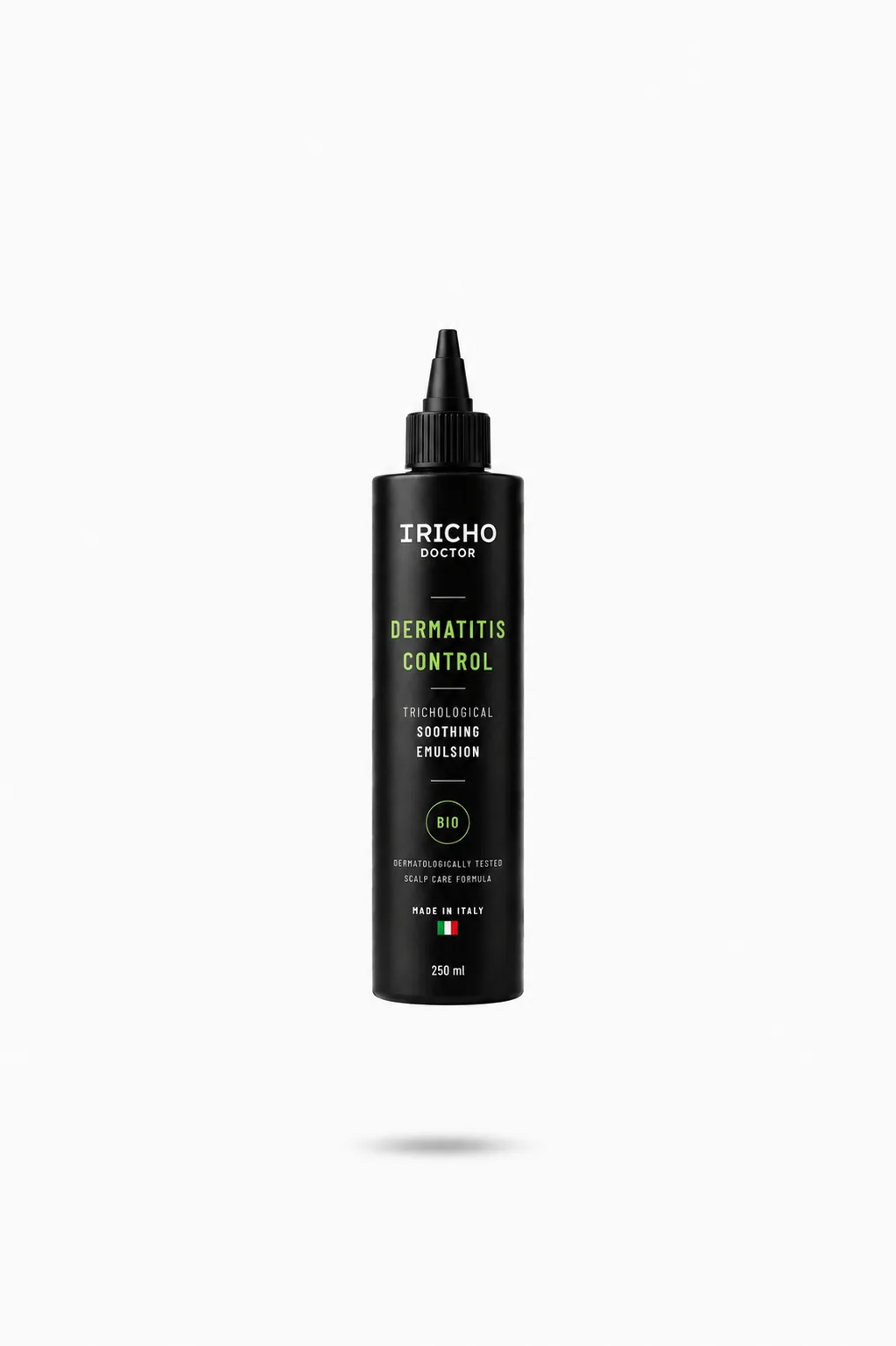
At TRICHO DOCTOR this step is Dermatitis Control Emulsion, a soothing cleansing emulsion developed for scalp and skin prone to recurrent flaking, redness and sensitivity. It helps reduce scales, tightness and discomfort while respecting the scalp barrier. It contains piroctone olamine, lactic acid, lavender and linseed. Piroctone olamine is widely used in cosmetics for dandruff-prone scalps; lactic acid is an alpha-hydroxy acid used for gentle exfoliation.
This is cosmetic care: it complements a doctor’s recommendations and does not replace them. Use the emulsion as directed on the pack.
On the site, the products are grouped into protocols: the test selects a line for the condition of your scalp and one of three levels – Base, Advanced or Intensive.
When to see a dermatologist
For mild itching and tightness without visible skin changes, gentle home care may be reasonable to try first. See a dermatologist or doctor if:
- there are sores, crusts, weeping or bleeding on the scalp;
- the skin hurts, burns, or is noticeably red or swollen;
- hair is falling out in patches or in whole clumps;
- flaking and redness are spreading to the face (the eyebrows, the sides of the nose, the skin behind the ears) or to the body;
- the itching wakes you at night, or came on suddenly and severely;
- nothing has changed after several weeks of gentle care;
- the symptoms are in a child, or appeared during pregnancy or while you were taking medication.
A severe reaction after colouring – swelling of the face or eyelids, severe burning, difficulty breathing – needs immediate medical help.
If none of these warning signs applies and you want to put your routine in order, start with the free scalp test.
Frequently asked questions
Why does my scalp itch if I have no dandruff?
Itching with no visible flakes is common: dryness, hot water, badly rinsed products, a reaction to a new shampoo or hair dye, or stress may be behind it. If the itching does not settle once you have simplified your routine, have a dermatologist look at your scalp.
How often should I wash my hair if my scalp is sensitive?
There is no single rule; go by how quickly your scalp becomes oily. Both extremes are irritating: washing too rarely, which lets sebum and sweat build up, and cleansing too vigorously with hot water. A mild product and thorough rinsing matter more than frequency.
Can itching be a reaction to shampoo or hair dye?
Yes. The skin can respond with irritation or an allergic reaction, sometimes only after repeated use. Stop using the new product and go back to a simple routine; if the reaction does not settle, see a dermatologist or allergist.
Can cosmetics replace treatment for seborrheic dermatitis?
No. Seborrheic dermatitis is diagnosed and treated by a dermatologist. Cosmetic care cleanses and soothes the scalp and helps reduce the appearance of scales and the feeling of discomfort, but it remains a complement to what the doctor prescribes.
This article is for information only and does not replace the advice of a doctor or trichologist.