Oily scalp: why hair gets greasy so fast and how to care for it
How oily your scalp is depends on sebaceous glands, hormones and heredity, yet habits make a big difference. Here are the causes and the logic of a consistent routine.
Washed in the morning, greasy by evening
Your hair is clean and light in the morning; by the end of the working day the roots are shiny and flat. An oily scalp is one of the most common hair care complaints, and it usually says little about hygiene and a lot about how the skin itself works.
The source is sebum, the skin’s own oil. It is made by the sebaceous glands, which open into the hair follicles, and the scalp has a particularly large number of them. Sebum is a mixture of lipids: together with sweat, it forms a protective film and keeps the skin and the hair shaft supple. The trouble starts when there is more of it than needed, or when it spreads along the hair too quickly.
What is set from within: hormones, heredity and age
How much sebum you produce depends above all on how the glands work, not on what you wash with or how often.
- Hormones. Sebaceous glands respond to androgens. Inside the gland, the enzyme 5α-reductase converts testosterone into the more potent dihydrotestosterone (DHT), which stimulates sebum production. That is why hair often becomes greasy in the teenage years, why oiliness can change during the menstrual cycle and in pregnancy, and why it tends to ease gradually with age.
- Heredity. The size and activity of the glands are largely inherited.
- Hair type. With the same amount of sebum, fine straight hair is coated faster than thick or curly hair, so the oil shows sooner.
No cosmetic can switch these factors off, but they only set the baseline; habits decide the rest.
What makes greasy hair worse: water, heat, styling and hands
Harsh washing and the idea of a “rebound effect”
It is often said that frequent washing makes hair greasy faster, because the glands respond by working harder. There is no convincing evidence for this: the glands are regulated mainly by hormones and heredity, not by the amount of sebum on the surface.
In fact, very hot water, harsh cleansing and scrubbing with your nails irritate the scalp and disrupt its protective barrier: it feels tight, itches and flakes, and looks oily and dried out at once. Washing too rarely, on the other hand, lets sebum, sweat and product residue build up.
Heat, hats and exercise
In the warmth, sebum becomes more fluid and spreads along the hair more easily, while sweat adds moisture. The roots lose their freshness sooner in summer, under a hat, after a workout or a hot blow-dry.
Styling products and care in the wrong place
Waxes, oils, creams, sprays and dry shampoo settle at the roots and mix with sebum. Conditioner or a mask applied to the scalp rather than the lengths does the same.
The habit of touching your hair
Every touch carries sebum from the roots down the lengths, and so does a brush that is rarely washed.
What helps an oily scalp and what does not
What helps:
- washing as often as you need to feel comfortable, even every day, with a shampoo suitable for frequent use;
- warm rather than hot water;
- massaging the shampoo into the scalp with your fingertips and rinsing it out thoroughly;
- conditioner and masks on the lengths and ends only.
What does not help:
- “training” your hair to go longer between washes: there is no reliable evidence that the glands then slow down;
- drying the scalp out with alcohol-based products or household soap;
- using dry shampoo instead of washing: it absorbs some oil but does not remove sebum from the skin.
To find out what care suits your scalp, take the free scalp test: it is short and matches you with a personal protocol.
Building an oily scalp routine: cleansing and a leave-in step
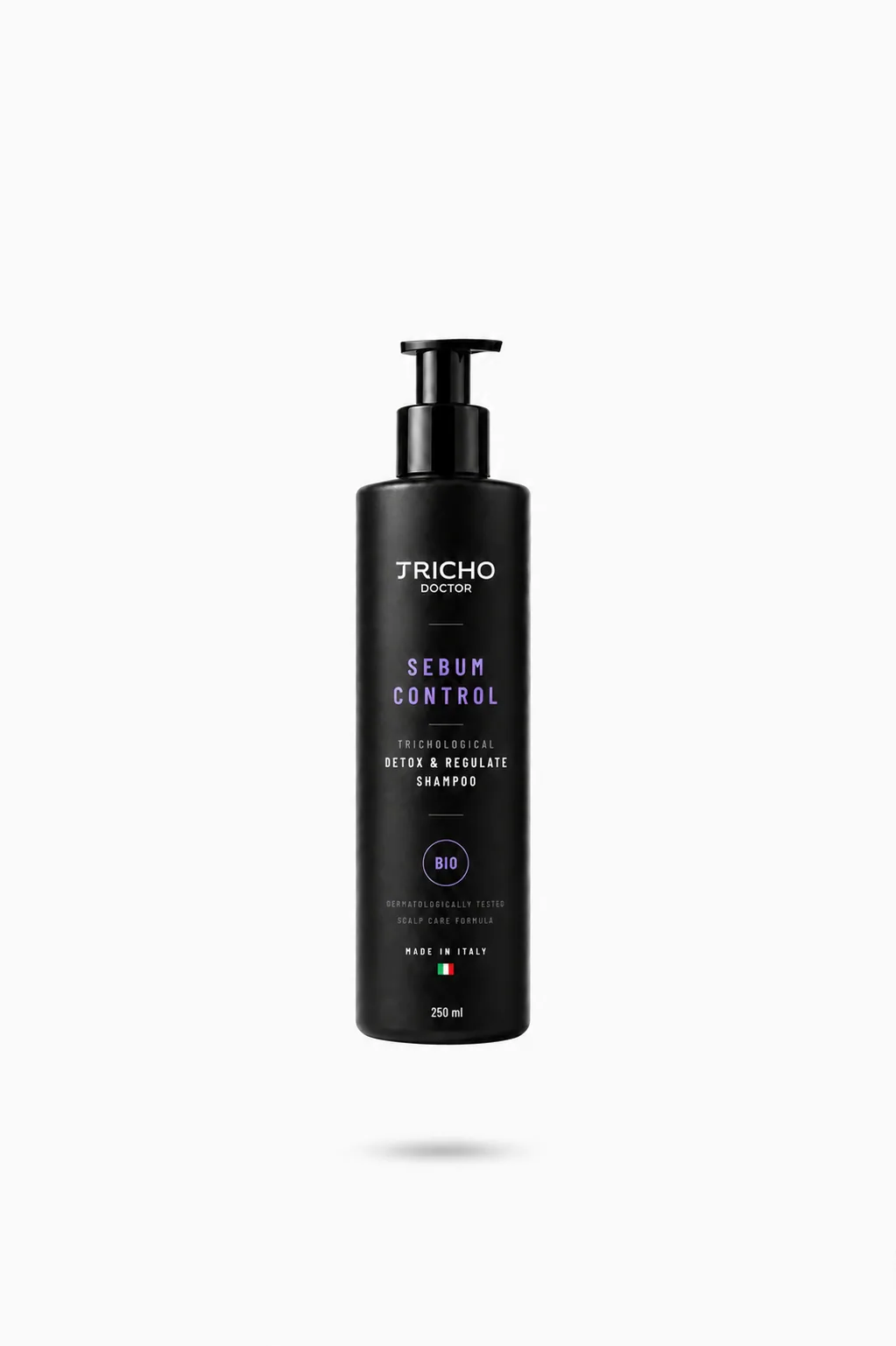
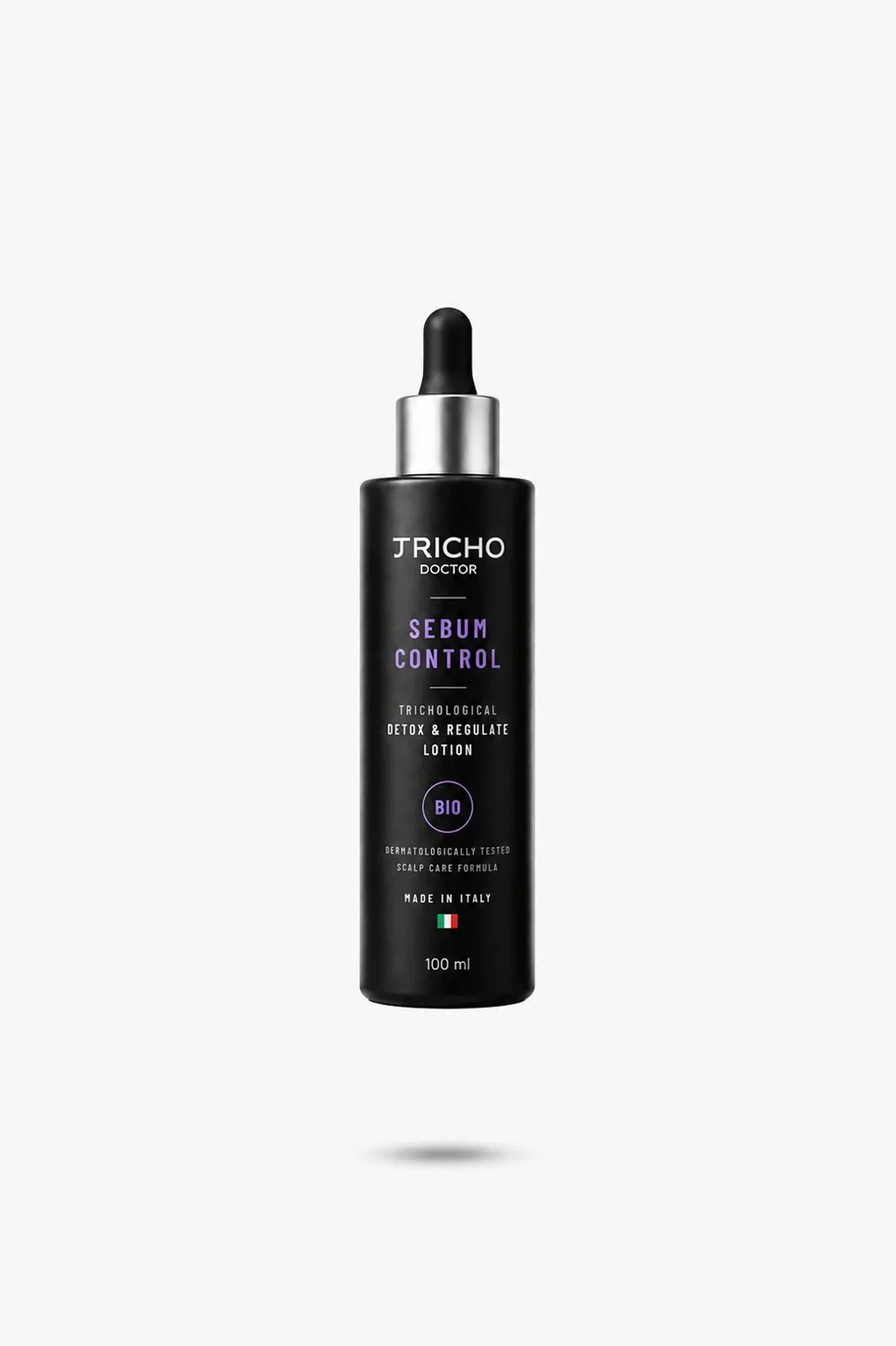
A consistent routine for an oily scalp is built from steps that complement each other: depending on what your scalp needs, the protocol may include Sebum Control Shampoo alone or the shampoo together with Sebum Control Lotion.
The cleansing step: shampoo. It is a rinse-off product, so it works while you wash. Sebum Control Shampoo is made for excessive scalp oiliness and hair that quickly turns greasy again: it removes accumulated sebum and helps regulate the excess. It contains piroctone olamine, burdock, nettle and sage.
The leave-in step: lotion. The lotion stays on the scalp and continues the care between washes. Sebum Control Lotion is intended for persistent oiliness; it combines exfoliating acids (including glycolic acid), purifying sage and nettle extracts, and inulin, which supports the skin’s microbiome.
For how to use them, and how often, follow the directions on each pack.
In scalp care, regularity matters more than any single “strong” product: the same steps, week after week. On the site, a protocol is just such a set of steps, and it comes in three levels: Base, Advanced and Intensive. The test works out which one suits you.
When to see a dermatologist about an oily scalp
On its own, an oily scalp is a cosmetic matter, but sometimes there is a condition behind it that needs a diagnosis. Malassezia yeasts live naturally on the scalp; they feed on the lipids in sebum, and on oily skin they are linked with dandruff and seborrheic dermatitis. Only a doctor can tell the two apart and make a diagnosis.
See a dermatologist or doctor if:
- the oiliness comes with redness, persistent itching, pain, greasy yellowish scales, crusts, weeping, pustules or bleeding;
- the oiliness has increased sharply for no obvious reason;
- you are losing noticeably more hair than usual, in clumps or in patches;
- the problem affects a child, or appeared during pregnancy or while you were taking medication;
- nothing has changed for a long time despite gentle, regular care.
Cosmetics do not replace treatment in these cases: medicated products are prescribed by a doctor.
If you have none of these warning signs, take the scalp test and get a protocol matched to your scalp.
Frequently asked questions
Can I wash an oily scalp every day?
Yes, if that is what you need to feel comfortable. What matters is how you wash: warm water, a shampoo suitable for frequent use and a gentle massage instead of scrubbing.
Is it true that frequent washing makes hair greasy faster?
There is no convincing evidence for that: sebum production is regulated mainly by hormones and heredity. Cleansing that is too harsh can irritate the scalp, though, so wash gently and regularly.
Why use a lotion if I already have a shampoo?
Shampoo is the rinse-off cleansing step and works during washing. A leave-in lotion stays on the scalp and continues the care between washes. They complement each other; the test shows whether your protocol includes the shampoo alone or both.
Does diet affect how oily your scalp is?
The link between diet and sebum production has not been studied enough, and the findings are mixed. A varied diet is good for the skin in general, but it does not replace scalp care; if you suspect a link with food, talk to a doctor.
This article is for information only and does not replace the advice of a doctor or trichologist.