
Dandruff and an itchy, flaking scalp
Dandruff is visible flaking of the scalp, often with itching. It is commonly linked to Malassezia, a yeast that lives on every scalp and grows more where there is a lot of sebum. Regular care with an anti-dandruff shampoo and a leave-in lotion helps reduce visible flakes and keep them under control.
Answer a few questions and get the protocol for your scalp: which products, in what order and how often.
Why it happens
The scalp renews its surface all the time; with dandruff this happens faster and the cells come off in visible flakes. Malassezia feeds on sebum and its by-products can irritate the scalp, so dandruff is often worse on an oily scalp, in winter, under stress or with irregular washing. Fine, dry flakes usually come from a dry, tight scalp; larger, yellowish, greasy flakes point to oily dandruff.
What helps in scalp care
Use an anti-dandruff shampoo as its directions say, massage it into the scalp and leave it on for a few minutes before rinsing. Piroctone olamine is a well-studied anti-dandruff active; salicylic acid helps loosen and remove flakes. A leave-in lotion keeps the actives on the scalp between washes. Dandruff tends to come back, so keep a maintenance routine after the flakes have gone.
When to see a dermatologist
See a dermatologist if the flakes are thick and yellow or stick to red patches, spread to the face, eyebrows or behind the ears, if the scalp burns, weeps or bleeds, or if nothing changes after four to six weeks of regular care.
The care protocol, step by step
Dandruff Control protocol
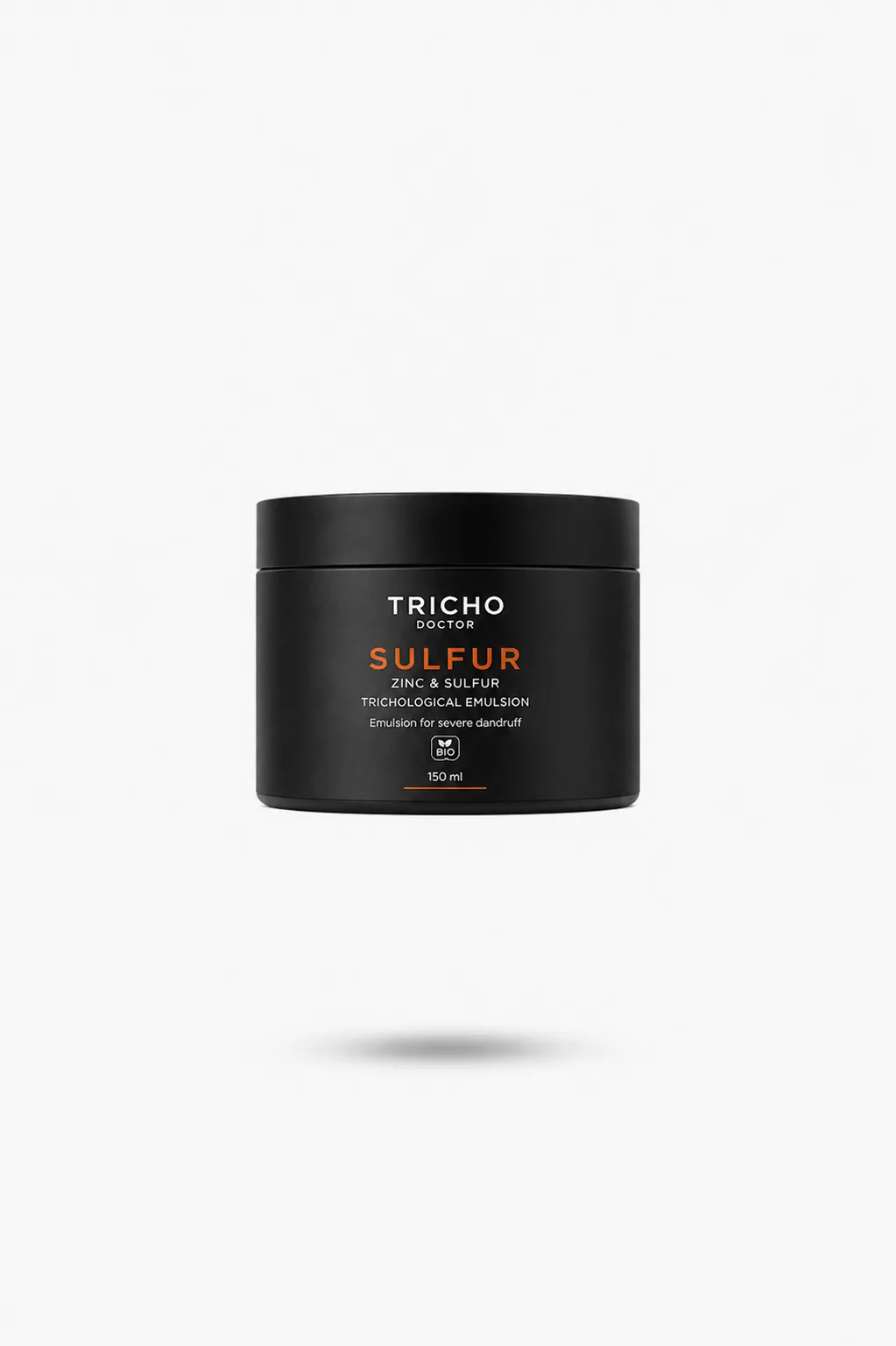
- 01EXFOLIATESulfur EmulsionDepending on your test result
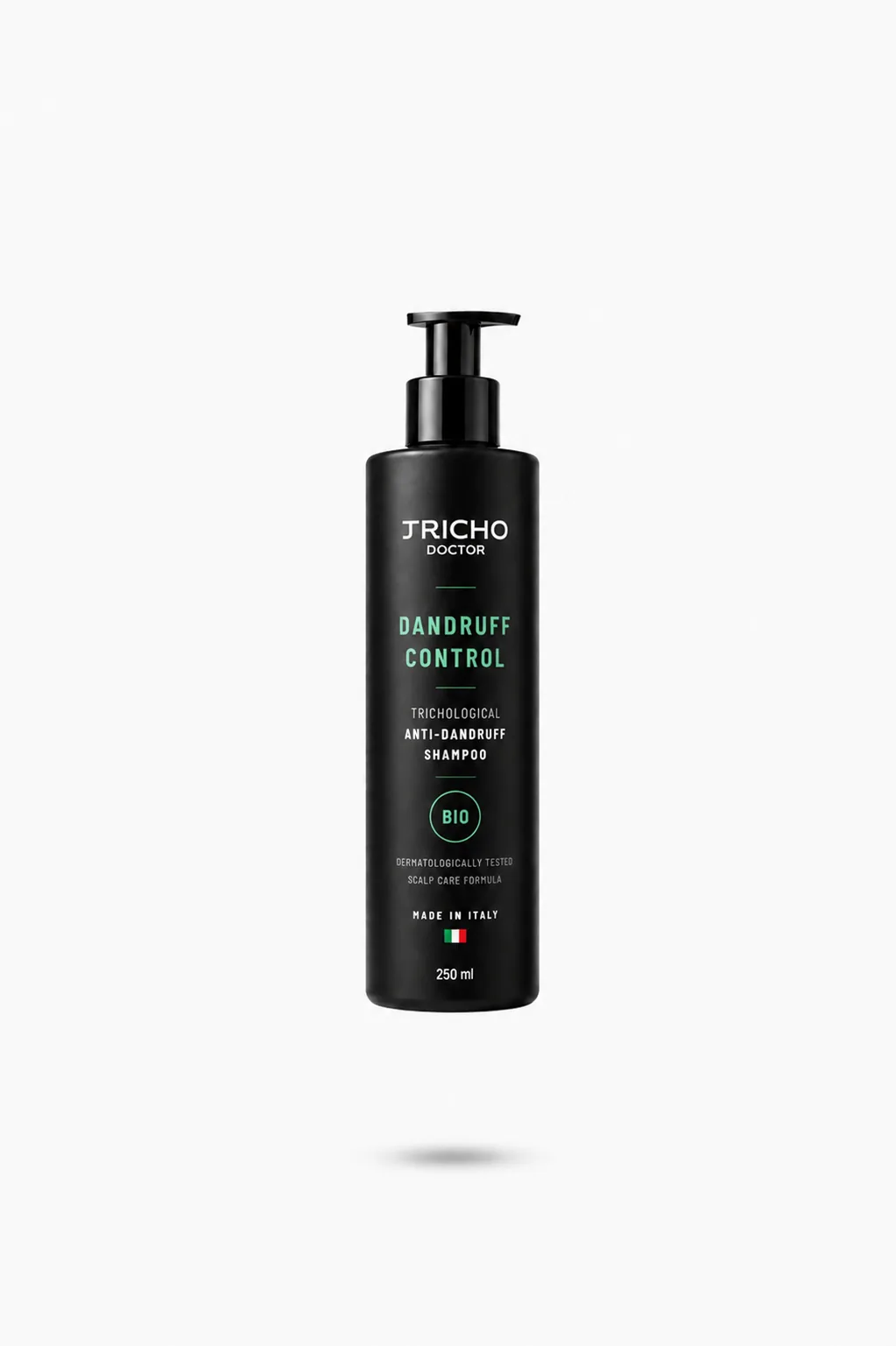
- 02CLEANSEDandruff Control Shampoo
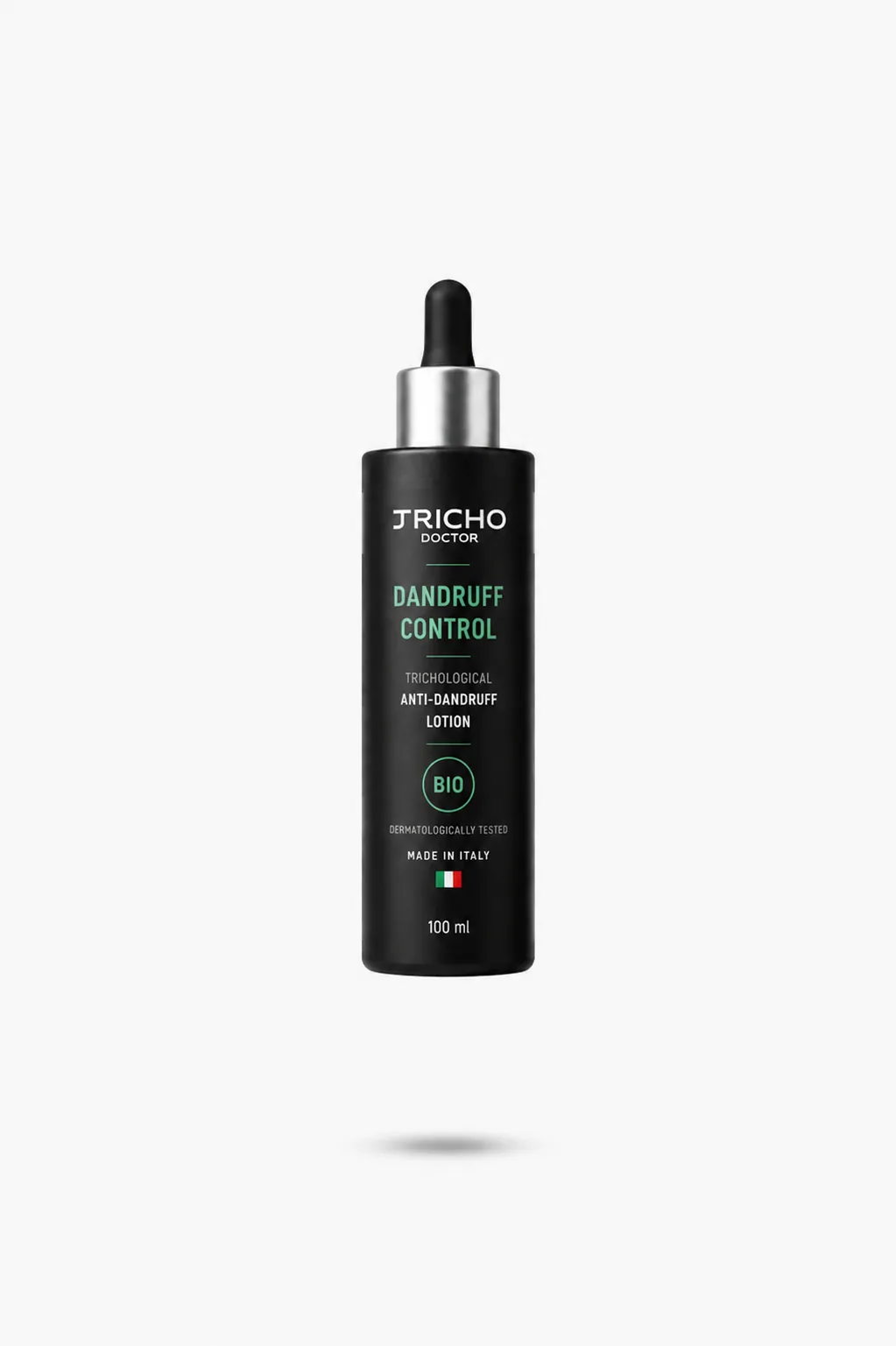
- 03CONTROLDandruff Control Lotion
SULFUR EMULSION and DANDRUFF CONTROL SHAMPOO are not used one after another in the same wash. Alternate them every other wash: SULFUR EMULSION for one wash, DANDRUFF CONTROL SHAMPOO for the next, and so on. SULFUR EMULSION is itself a cleansing product, so no additional shampoo is needed after it.
Products in this protocol
Key active ingredients
Questions and answers
What is the difference between dry and oily dandruff?
Dry dandruff is small, white, powdery flakes on a tight scalp. Oily dandruff is larger, yellowish flakes that stick to the scalp and hair, usually with an oily scalp. Both are often linked to Malassezia, but oily dandruff typically needs more intensive care.
How often should I use an anti-dandruff shampoo?
Usually two to three times a week at first, leaving it on the scalp for a few minutes; follow the product's own directions. Once the flakes are under control, many people keep using it once or twice a week so they do not come back.
Why does dandruff keep coming back?
Because the yeast linked to dandruff is a normal part of the scalp and the tendency stays. Stopping care as soon as the flakes disappear often brings them back. A maintenance routine with a shampoo and a leave-in lotion helps keep the scalp balanced.
Related articles

Shampoo and leave-in lotion: how the two steps work together
A shampoo cleanses the scalp and is rinsed away; a leave-in lotion stays on and complements your care between washes. Here is why the two steps do not duplicate each other.
Piroctone olamine: what it is and why it is used in scalp care
Piroctone Olamine appears on the label of many anti-dandruff shampoos and scalp lotions. A plain guide to what the ingredient is, what it does in a formula and what not to expect of it.
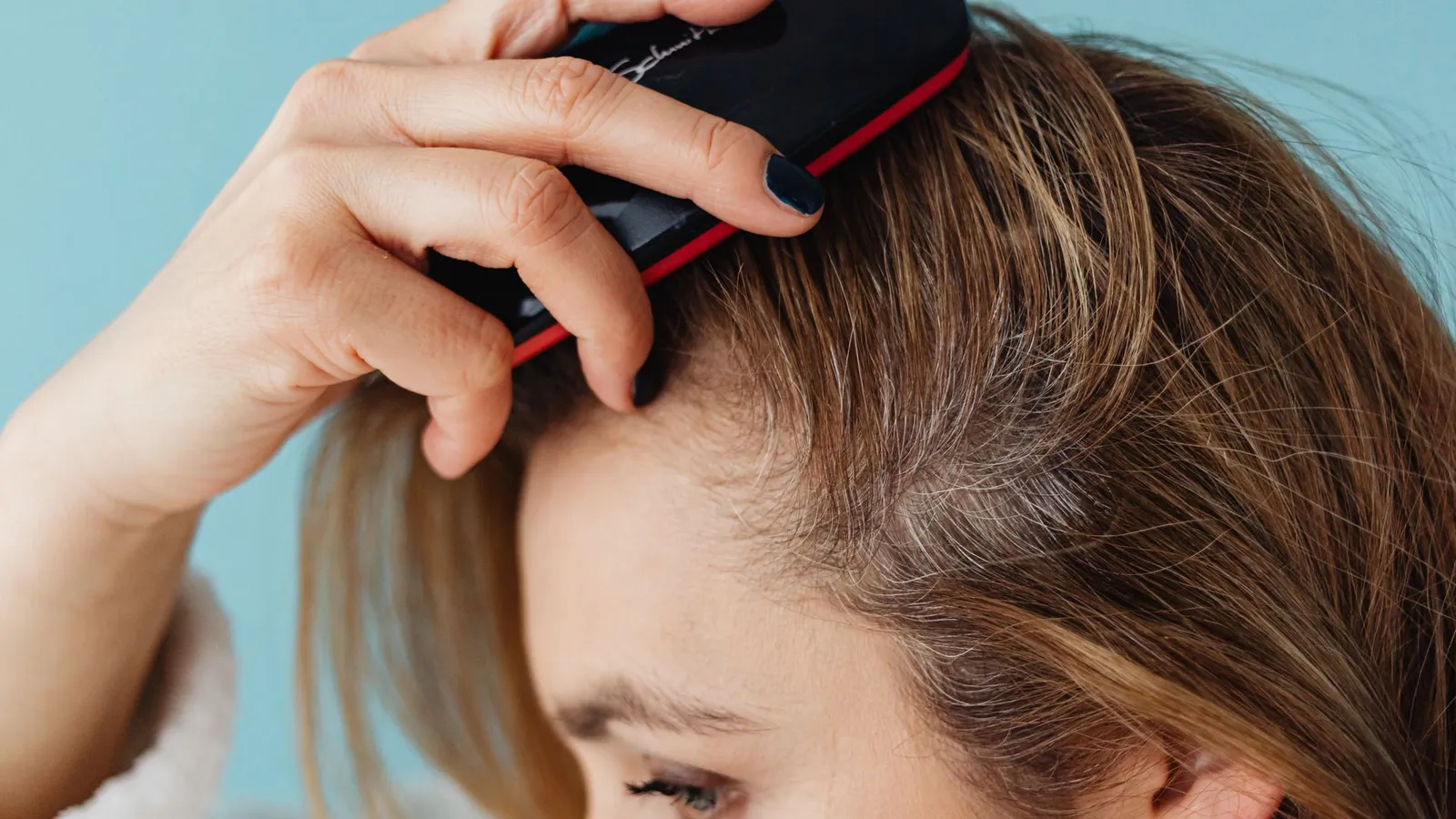
Dry and oily dandruff: the difference and how to care for your scalp
Fine white flakes on your shoulders, or yellowish scales that cling to the scalp? Here is how to tell dry and oily dandruff apart and adjust your scalp care to match.
Get your personal protocol
Answer a few questions and receive a personalised protocol with clear reasoning for every product.