Dry and oily dandruff: the difference and how to care for your scalp
Fine white flakes on your shoulders, or yellowish scales that cling to the scalp? Here is how to tell dry and oily dandruff apart and adjust your scalp care to match.
A dark jumper with fine white specks on the shoulders. Or the opposite: clean shoulders, but yellowish scales at the roots that will not brush off. Both are called dandruff, yet they look different and call for different care. Dry and oily dandruff are not two diagnoses but two descriptions of how the scalp behaves.
What dandruff is and what causes it
The skin on the scalp renews itself constantly: old cells rise to the surface and are shed unnoticed. With dandruff, this process runs faster than usual. The cells do not have time to separate one by one, so they stick together and come away as visible flakes.
Three factors are usually involved:
- Sebum. It is produced by the sebaceous glands, which are especially numerous on the scalp.
- The yeast Malassezia. It lives on almost everyone’s skin and feeds on the lipids in sebum. It is a normal part of the microbiome, not an infection.
- Individual sensitivity. In some people the skin reacts to the by-products of this yeast with irritation, itching and faster renewal. Others carry the same yeast and have no dandruff.
Two important things follow. Dandruff is not contagious: you cannot “catch” it from a comb, a hat or a pillow, because everyone carries Malassezia anyway. Nor is it a sign of poor hygiene: it also affects people who wash their hair regularly and thoroughly.
Dry and oily dandruff: how to tell them apart
The distinction is practical rather than strictly medical, but it helps when you choose your care.
Dry dandruff
- small, light flakes, white or greyish;
- they come away easily and fall onto shoulders and clothes;
- the scalp feels tight and may itch;
- the roots do not look greasy.
Oily dandruff
- larger, yellowish flakes, greasy to the touch;
- they cling to the scalp and roots and stick together in flat clumps;
- the hair soon stops looking fresh, and the roots turn greasy shortly after washing;
- it hardly shows on clothes, because it stays on the head.
Dandruff or just a dry scalp?
Not all fine flaking is dandruff. A dry scalp lacks moisture and lipids; excess sebum is not its problem. A few signs give it away:
- the tight feeling is strongest straight after washing;
- the skin is dry elsewhere too: on the face, hands or shins;
- hot water, frequent blow-drying and harsh shampoos make the flaking worse.
If the flaking eases noticeably with gentler washing and warm water, dryness is the more likely explanation. If the flakes keep coming back, the scalp itches as well and the roots turn greasy quickly, it looks more like dandruff.
It is often hard to tell by eye. The short free scalp test on our site will help you get your bearings.
Common dandruff care mistakes
- Washing less often “so as not to dry the scalp out”. Sebum and flakes build up, and oily dandruff becomes more visible.
- Hot water. It dries and irritates the skin with either type of dandruff.
- Scraping flakes off with your nails or a comb. Damaged skin responds with even more flaking and irritation.
- Rubbing oils into the scalp. With oily dandruff, this adds lipids where there are already too many.
- Washing until “squeaky clean” with strongly degreasing products. Over-dried skin responds with tightness and itching.
Scalp care for dry and for oily dandruff
The basics are the same: wash regularly, as often as your scalp needs, use warm water, massage the shampoo in with your fingertips and rinse it out thoroughly. After that, the priorities differ.
With dry dandruff, the important thing is not to make the dryness worse: gentle cleansing, no hot water, and the hairdryer on a moderate heat, held away from the scalp. The aim is to remove the flakes gently and ease the feeling of tightness.
With oily dandruff, what matters most is cleansing the scalp thoroughly and dealing with dense scales that cling to it. This is where keratolytic exfoliation comes in: keratolytics soften hardened scales and help them come away.
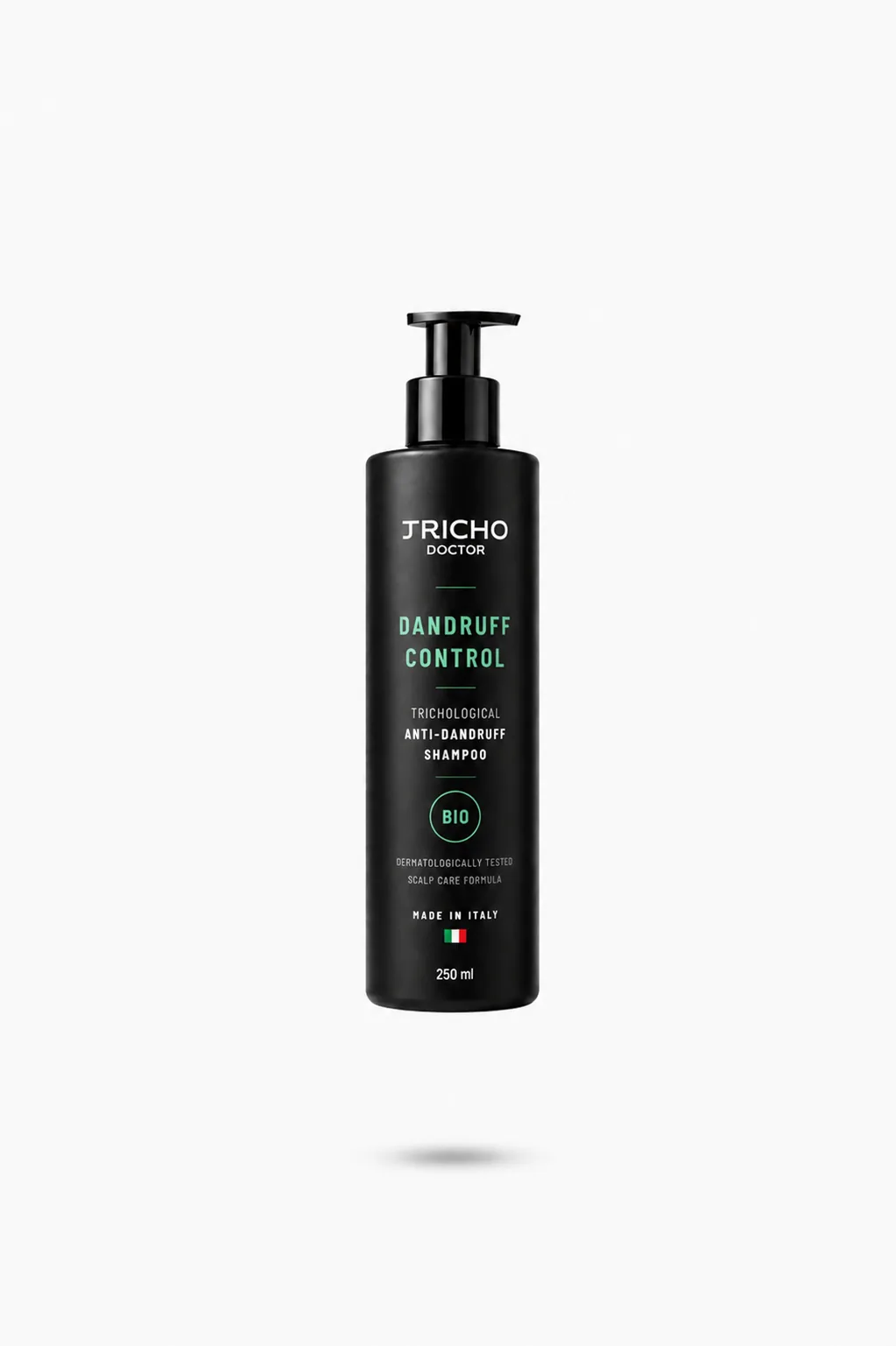
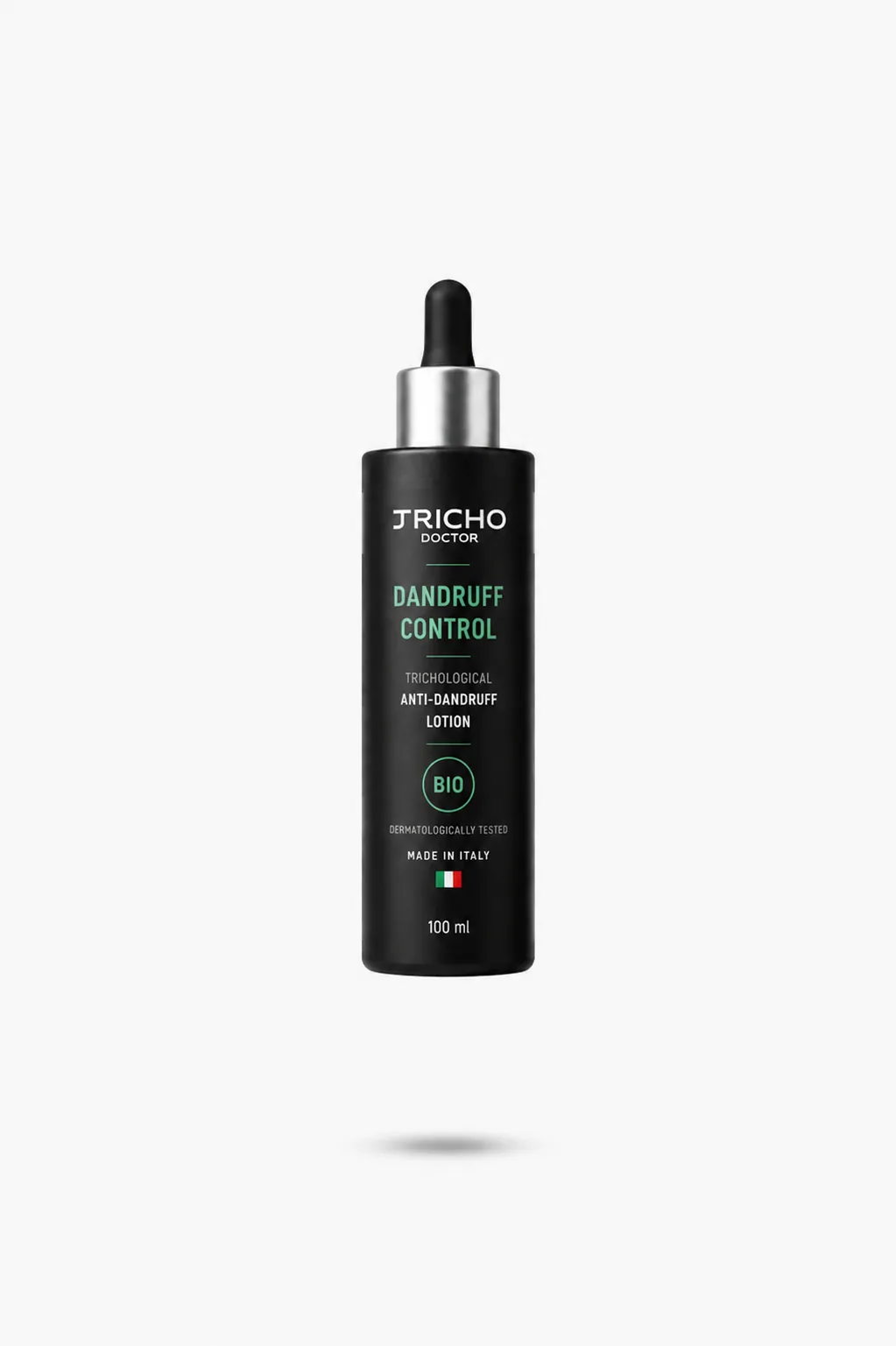
TRICHO DOCTOR care handles these tasks with two complementary steps. Dandruff Control Shampoo is the rinse-off cleansing step during washing: its complex based on piroctone olamine targets Malassezia-associated dandruff and helps remove scales. Dandruff Control Lotion is a separate leave-in step: it stays on the scalp and continues the care between washes, combining keratolytic exfoliation (salicylic acid) with anti-dandruff support. Depending on what your scalp needs, the protocol may include the shampoo alone or the shampoo together with the leave-in lotion. Both are cosmetic products: they care for the scalp and help reduce the appearance of flaking, but they do not treat diseases. Follow the directions on the pack.
The test works out which steps you need. It selects a protocol: a product line matched to your scalp’s needs, at one of three levels – Base, Advanced or Intensive.
When to see a dermatologist about a flaky scalp
Ordinary dandruff is a matter for cosmetic care. See a dermatologist or doctor if:
- the scalp is very red, painful, weeping or bleeding;
- thick, dense crusts or plaques have formed;
- the flaking has spread beyond the scalp: to the eyebrows, the sides of the nose, behind the ears or onto the chest;
- hair is falling out in patches or clumps along with the flaking;
- the problem came on suddenly or is not easing despite gentle, consistent care;
- a child has developed scales and crusts.
Signs like these can point to various skin conditions, including seborrheic dermatitis and psoriasis. Only a doctor can make a diagnosis and prescribe medicated products; cosmetics do not replace that.
If your main concern is flakes and roots that turn greasy quickly, start simply: take the free scalp test and get your personal care protocol.
Frequently asked questions
Is dandruff contagious?
No. Malassezia, the yeast linked to dandruff, lives on almost everyone’s skin. Dandruff comes from the way an individual’s skin reacts, not from being passed from person to person.
Can dandruff look dry at one time and oilier at another?
Yes, the picture can change. The amount of sebum depends on the season, hormones, stress and your care routine, so the same person’s dandruff does not always look the same. Dry and oily dandruff are descriptions of the scalp’s condition, not two separate diagnoses.
How often should you wash your hair if you have dandruff?
As often as your scalp needs; there is no single rule. With oily dandruff, washing infrequently usually makes the hair and scalp look worse, because sebum and flakes build up. With dry dandruff, gentleness matters more than frequency: warm water and mild cleansing.
Why does dandruff keep coming back?
Because its causes do not go away: the sebaceous glands keep working, and Malassezia remains part of the skin’s microbiome. So it makes more sense to rely on regular care that suits your scalp than to hope for a one-off “victory”. If the flaking stubbornly persists, see a dermatologist.
This article is for information only and does not replace the advice of a doctor or trichologist.