
Sensitive, red and irritated scalp
A sensitive scalp reacts with redness, itching, burning or flaking to things a calm scalp tolerates. Gentle, soothing care that cleanses without stripping helps restore comfort and support the skin barrier. Persistent redness with greasy scales can be a sign of seborrheic dermatitis and is worth showing to a dermatologist.
Answer a few questions and get the protocol for your scalp: which products, in what order and how often.
Why it happens
Common triggers are harsh surfactants, fragrances, hair dye, very hot water, frequent heat styling, cold dry air, stress and lack of sleep. On a scalp prone to seborrheic dermatitis, Malassezia and sebum add to the irritation: redness comes together with flaking, often along the hairline, behind the ears or around the eyebrows.
What helps in scalp care
Choose a mild cleansing product made for sensitive, reactive skin, wash with lukewarm water and try not to scratch. Leave strong styling products and new hair dye aside until the scalp is calm. Soothing ingredients help reduce discomfort; on a flaking, seborrheic scalp, gentle exfoliating and anti-dandruff actives help keep the flakes under control. Introduce one new product at a time so you know what your scalp tolerates.
When to see a dermatologist
See a dermatologist if the scalp weeps, bleeds or has crusts, if redness spreads to the face or body, if itching disturbs your sleep, or if symptoms do not improve after two to three weeks of gentle care. Only a doctor can diagnose dermatitis or psoriasis and prescribe treatment; cosmetics support daily care.
The care protocol, step by step
Dermatitis Control protocol
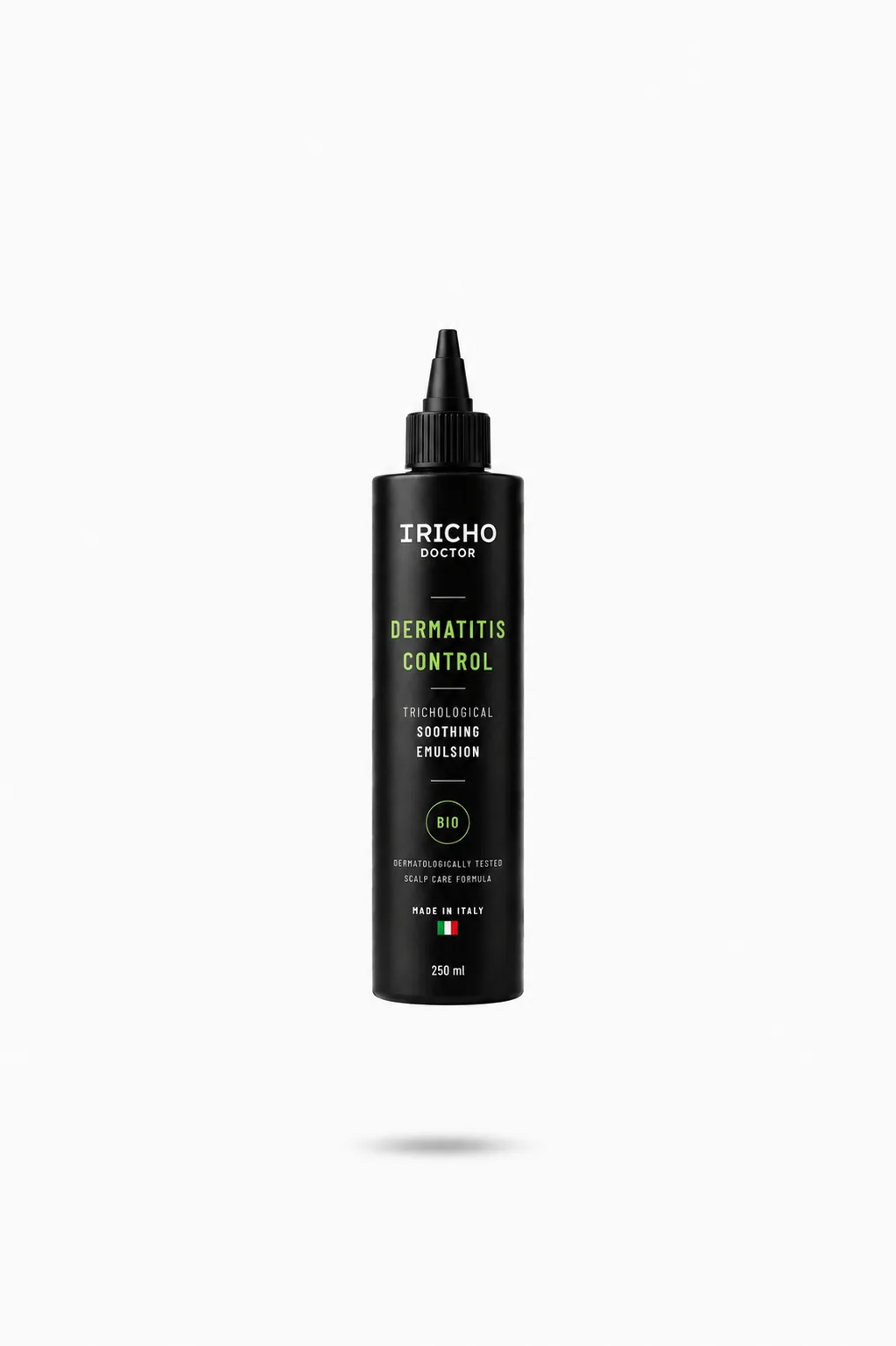
- 01TREATDermatitis Control Emulsion
Products in this protocol
Key active ingredients
Questions and answers
Why is my scalp red and itchy?
Most often because of irritation from products, hair dye, hot water or dry air, or because the scalp is prone to seborrheic dermatitis. Gentle, soothing care usually helps; if the redness persists, comes with crusts or spreads, see a dermatologist.
Can I wash my hair every day if my scalp is sensitive?
Yes, with a mild product made for sensitive skin and lukewarm water. Gentle daily washing is often better for a reactive, flaking scalp than letting sebum and flakes build up.
Is a sensitive scalp the same as seborrheic dermatitis?
No. Many people simply have a scalp that reacts easily. Seborrheic dermatitis is a skin condition with redness and greasy, yellowish scales, often on the face too. It should be diagnosed by a doctor; cosmetic care can support the scalp alongside the treatment a doctor recommends.
Related articles
Piroctone olamine: what it is and why it is used in scalp care
Piroctone Olamine appears on the label of many anti-dandruff shampoos and scalp lotions. A plain guide to what the ingredient is, what it does in a formula and what not to expect of it.
Itchy, irritated scalp: common causes and gentle care
Does your scalp itch or feel tight after washing? Here are the everyday causes, the first things to change in your routine and the signs that call for a dermatologist.
Get your personal protocol
Answer a few questions and receive a personalised protocol with clear reasoning for every product.