Hair loss from stress: why it shows up weeks later
Hair reacts to a difficult period weeks or even months later. Here is why that happens, what you can do yourself and when it is time to see a doctor.

The worst is behind you. The fever has gone, the deadline has been met, the baby is finally sleeping a little longer. And now, of all times, there is clearly more hair than usual on your brush and in the shower drain. Hair loss from stress is hard to recognise for exactly that reason: it does not start straight away. There is no mystery in the delay – it follows from the way hair grows.
Why hair reacts with a delay
Every hair follows its own cycle. The longest part is the growth phase, anagen. A short transition follows, then telogen, the resting phase: the hair no longer grows but stays in the follicle for a while before it falls out and makes room for a new one. That is why losing some hair every day is normal.
Normally only a small proportion of hairs are resting at any one time. After a major strain on the body, more hairs than usual move into the resting phase. At first nothing shows: they stay in place for several more weeks, sometimes a few months, and only then fall out – many at the same time.
Hence the confusion. People look for the cause in the past week, when it usually lies weeks or months further back. Specialists call this telogen shedding, or telogen effluvium.
What “stress” really means for hair
In everyday speech, stress means nerves and worry. For hair the word covers more: any major strain on the body. Most often it is one of these:
- an illness with a high fever
- surgery or an injury
- a crash diet and rapid weight loss
- childbirth and the first months after it, when hormonal changes add to the exhaustion
- a long period of pressure – at work, at home or while caring for someone close
- a prolonged lack of sleep
Often several come together: short nights, meals on the run and tension. A single bad day or an argument does not usually show in your hair. What counts is strain that was severe or went on for a long time.
What hair loss from stress looks like
It is usually diffuse: the hair thins evenly across the whole head rather than in one place. You notice it indirectly – a thinner ponytail, a slightly wider parting, more hair in your hand after washing. Clearly defined bald areas and round patches are not part of this picture.
The main point: in most cases this shedding is temporary. The follicles are not destroyed; they are resting. Once the cause is behind you, the cycle gradually returns to its usual rhythm. That takes months, not days, because hair grows slowly.
Panic is no help here. It pushes you into drastic steps: changing products every week, rubbing irritating home-made mixtures into your scalp, or washing your hair as rarely as possible “so that no more falls out”. The hairs that come away when you wash have already finished their cycle and would have fallen out anyway. An irritated scalp and fresh worry are just more strain. And promises to stop the shedding quickly cannot give you what you really need: time.
If you want to know what condition your scalp is in right now and what care suits it, take the free scalp test. It is short.
What you can do yourself
You cannot speed up the hair cycle, but you can avoid getting in its way and remove unnecessary strain.
- Sleep. A regular routine matters more than the perfect number of hours. Going to bed and getting up at roughly the same time is a good start.
- Regular meals. Hair needs energy and protein, and strict dieting is one more strain on the body. A varied diet with no skipped meals is a sensible basis.
- Gentle handling. No tight ponytails or plaits, no tugging a brush through wet hair, and go easy on heat styling and harsh colouring.
- Patience. Judge any change over months. Counting the hairs on your brush every day only feeds the anxiety.
Your scalp during a difficult period
Strain does not show only in the hair. Many people notice that their scalp gets oily faster, itches, feels tight or starts to flake. That is one more reason not to experiment but to keep to a calm, consistent routine: gentle cleansing, warm rather than hot water, and no scratching with your fingernails.
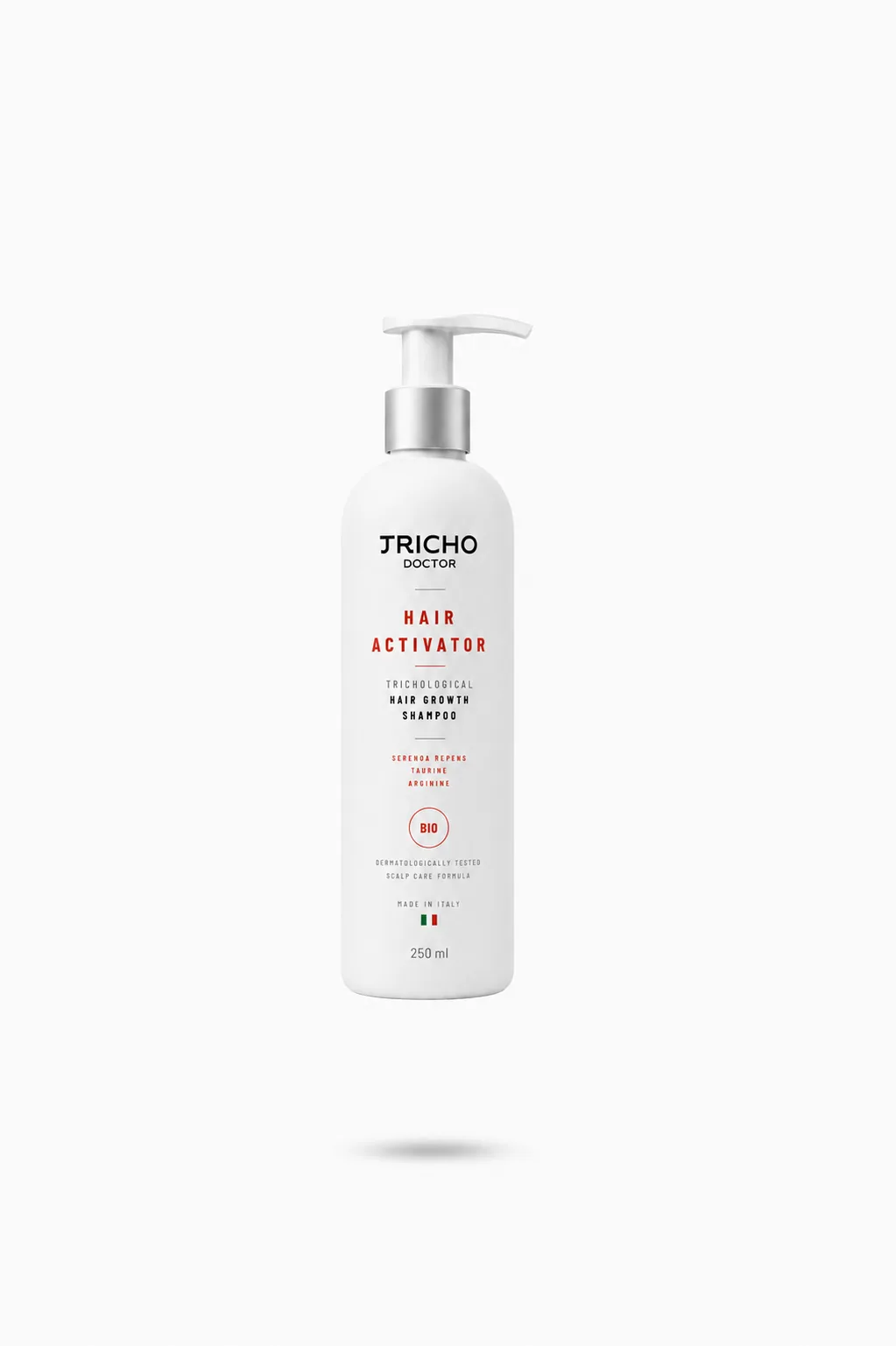
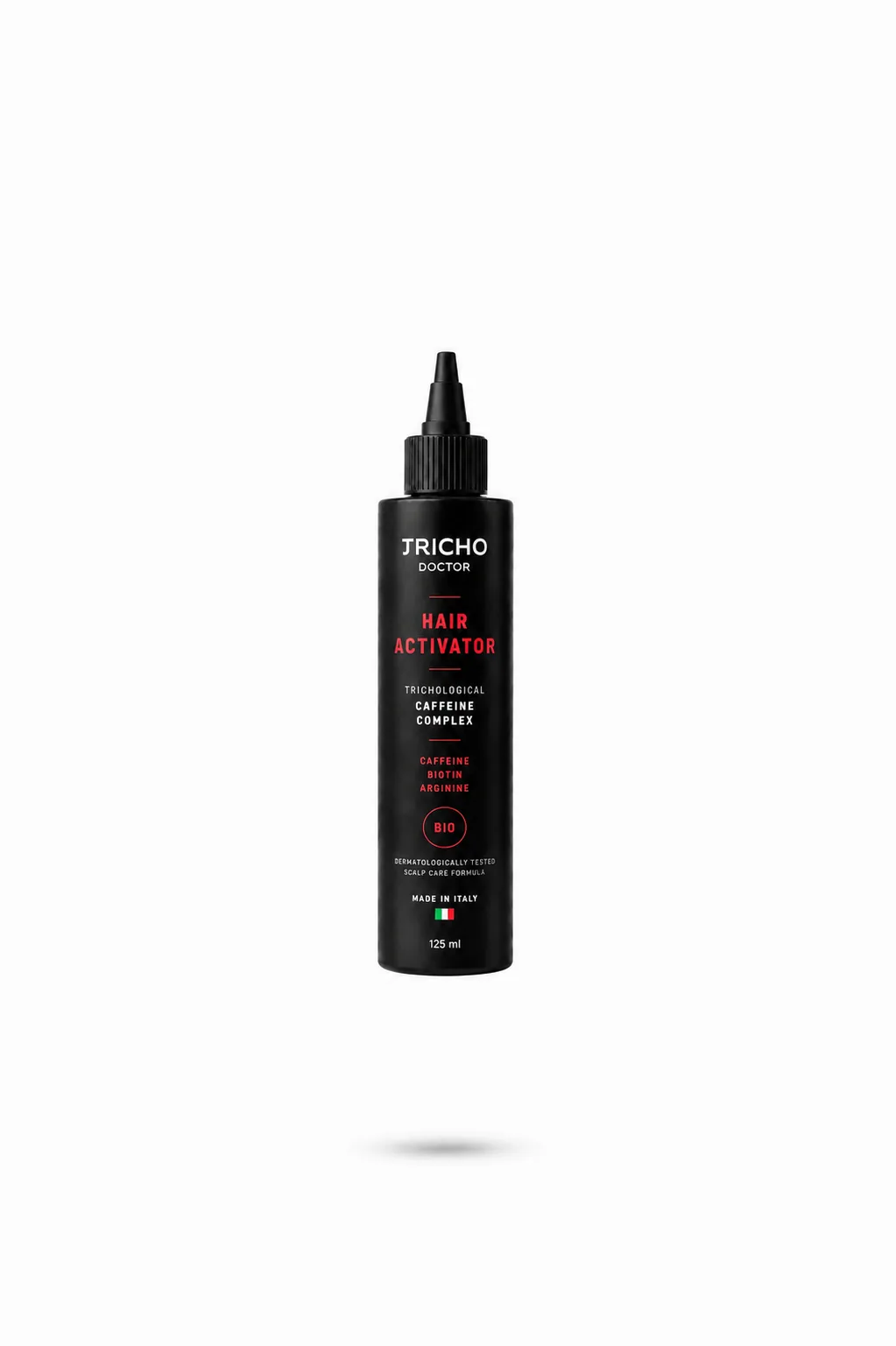
Cosmetics cannot stop telogen shedding or make hair grow faster – that depends on time and on the cause. Their job is more modest: keeping the scalp in good condition and caring for weakened hair. The HAIR ACTIVATOR line has two steps for this. Hair Activator Shampoo is a shampoo for weakened, fragile hair that cleanses and prepares the scalp; it contains saw palmetto leaf extract, taurine, arginine and piroctone olamine. Caffeine Complex is a leave-in complex with caffeine, biotin, arginine and niacinamide: it stays on the scalp, continues the care between washes and supports microcirculation. The two do not replace each other; they complement each other. Follow the instructions on the pack.
The test decides which steps you need – the shampoo alone or together with the leave-in step. Its result is a personal protocol at one of three levels: Base, Advanced or Intensive.
When to see a doctor about hair loss
See a dermatologist or doctor if:
- the shedding has not eased after several months, or is getting worse
- it started suddenly and very heavily, your hair is coming out in clumps, or clearly defined patches with no hair have appeared
- your scalp is painful, badly inflamed, weeping or bleeding
- you have other symptoms as well – marked tiredness, or noticeable changes in your weight or general well-being
- the shedding began during pregnancy, or is very heavy or long-lasting after childbirth
- it coincided with starting or changing a medicine
- a child is losing hair
A doctor will look for the cause and arrange tests if needed. Do not diagnose yourself from articles: “stress” may be hiding something else, and some causes need medical treatment. Only a doctor prescribes medicated products.
If none of these warning signs applies and you want a calm routine for this period, take the test and get your protocol.
Frequently asked questions
How long after stress does hair start to fall out?
Usually not straight away but after a delay of several weeks to several months. That is how long hairs that have moved into the resting phase stay in the follicle.
Will hair grow back after hair loss from stress?
In most cases this kind of shedding is temporary: the follicles remain and the cycle gradually returns to its usual rhythm. That takes months, because hair grows slowly. If nothing improves or the shedding increases, a doctor should look for the cause.
Can a shampoo or lotion stop this kind of shedding?
No. Cosmetic products do not stop shedding or speed up hair growth. They cleanse and support the scalp and care for weakened hair – a sensible part of your routine, but not a treatment.
Should I wash my hair less often if a lot of it is falling out?
No, there is no point. The hairs that come out when you wash have already finished their cycle; between washes they simply build up. Wash your hair as often as you need to, gently and without hot water.
This article is for information only and does not replace the advice of a doctor or trichologist.