Thinning Hair in Women: What Scalp Care Can Do and When to See a Doctor
Is your hair looking thinner and your parting wider? Here is what scalp care can realistically do, what cosmetics cannot do, and which signs mean it is time to see a dermatologist or trichologist.
There seem to be more hairs in your brush each morning, and a small tangle gathers in the shower drain. Your parting looks wider and your ponytail feels thinner. It is hard to tell whether this is normal shedding or a reason to pay closer attention.
The short answer is that scalp care cannot fix the cause of thinning hair in women. It cleanses the scalp, supports its condition and can help hair look fuller and better cared for. It does not remove the cause of thinning, and it cannot guarantee hair growth.
Below we look at why hair becomes thinner, what scalp care can realistically do, which signs mean you need a doctor and how to choose care that suits your scalp.
Why hair thins in women
Thinning hair rarely has a one-line explanation. Genetics and hormone receptors are recognised as playing a part in female pattern hair loss. That is why a tendency towards it sometimes runs in families.
Chronic telogen effluvium can look very similar. It is a different condition. A detailed medical history and an examination help to tell the two apart.
Hair loss in women can also be the first sign of a wider, systemic illness. So it is not worth guessing at the cause on your own.
The same rule applies if your hair has started thinning at a young age. Don't wait, and don't try to work out the cause by trial and error. See a specialist instead. A doctor makes the diagnosis after examining you and asking about your history. Neither an article nor an online test can do that.
What scalp care can and cannot do
The EU Cosmetics Regulation (EC) No 1223/2009 separates cosmetic products from medicines. Where that line falls depends on how a cosmetic is defined and what it is intended for.
It helps to keep three things apart:
- The ingredient. What a single substance is studied for is not a promise about the finished product.
- The finished cosmetic product. It cleanses and cares for the scalp, strengthens the hair and helps it look fuller and better cared for.
- Treating a disease. If thinning is linked to a medical condition, a doctor prescribes the treatment. Cosmetic care can only complement it.
Cosmetics do not stop hair loss, they do not regrow hair and they do not replace medical care. Results differ from woman to woman, and there are no timeframes or guarantees.
So can a shampoo help with thinning hair? A shampoo is the rinse-off cleansing step. Its job is to keep the scalp clean and comfortable. It does not remove the cause of thinning.
When to see a doctor: signs you shouldn't ignore
See a dermatologist or trichologist if:
- your hair has started falling out suddenly and heavily
- you notice patches of hair loss or smooth, bald areas
- your scalp hurts or burns, or has sores or crusts
- there is marked redness, scaling or intense itching
- hair loss after giving birth does not settle, or it started while you were taking medication
- you are pregnant or breastfeeding
- the symptoms affect a child
- the thinning continues despite good care
Alopecia, seborrheic dermatitis, psoriasis and fungal infections of the scalp are conditions that a doctor diagnoses. Cosmetics do not treat or prevent them. For female pattern hair loss, specialists stress that prompt diagnosis and treatment are important for the best outcome.
To get the most from your appointment, bring:
- when you first noticed the changes and how quickly they developed
- what has changed in your life, such as childbirth, menopause, stress, diet or weight
- a list of the medicines and food supplements you take
- photos of your parting taken at different times in the same lighting
Scalp care basics for thinning hair
Scalp care is not a substitute for a diagnosis. It does help your scalp and hair stay in good condition. Here is what you can do:
- Cleanse gently and regularly with a shampoo that suits your scalp.
- Notice how your scalp feels. Take oiliness, dryness, itching and sensitivity into account when you choose products.
- Handle your hair with care. Brush gently without tugging, wear tight hairstyles less often and go easy on hot styling tools.
- Care for the lengths. A conditioner or mask makes hair softer and easier to manage.
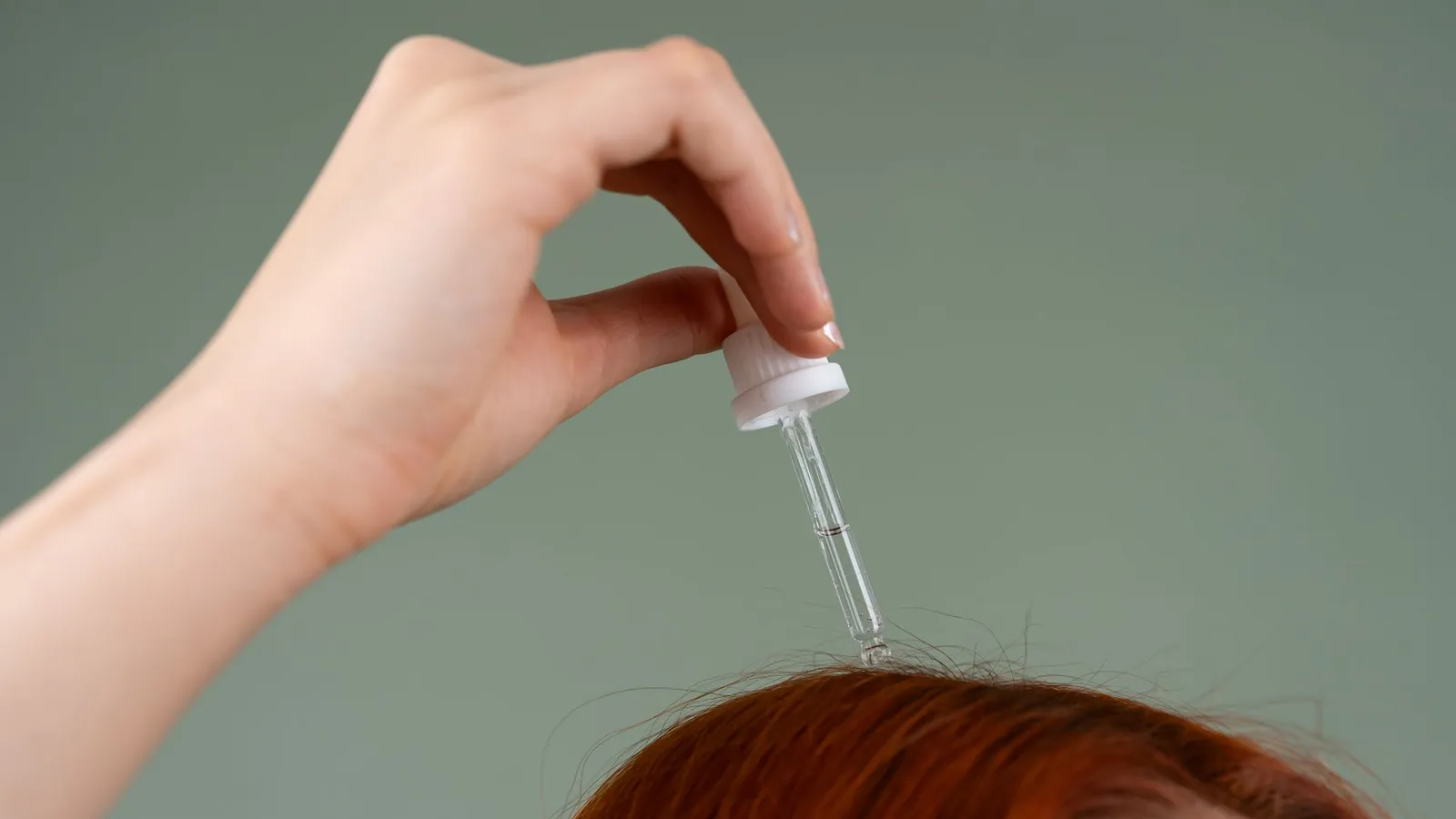
It is worth knowing the difference between the steps. A shampoo is rinsed off and cleanses. A leave-in lotion stays on the scalp and continues the care between washes. The two steps complement each other.
The product itself tells you how often and how much to use. Follow the directions on the product.
Choosing your care: the scalp test
A scalp can be oily, sensitive or prone to flaking, and care is chosen with that in mind. The free scalp test on our site asks a few questions and builds a personal care protocol for you: Get Your Personal Protocol.
TRICHO DOCTOR trichological cosmetics for weakened, thinning hair include:
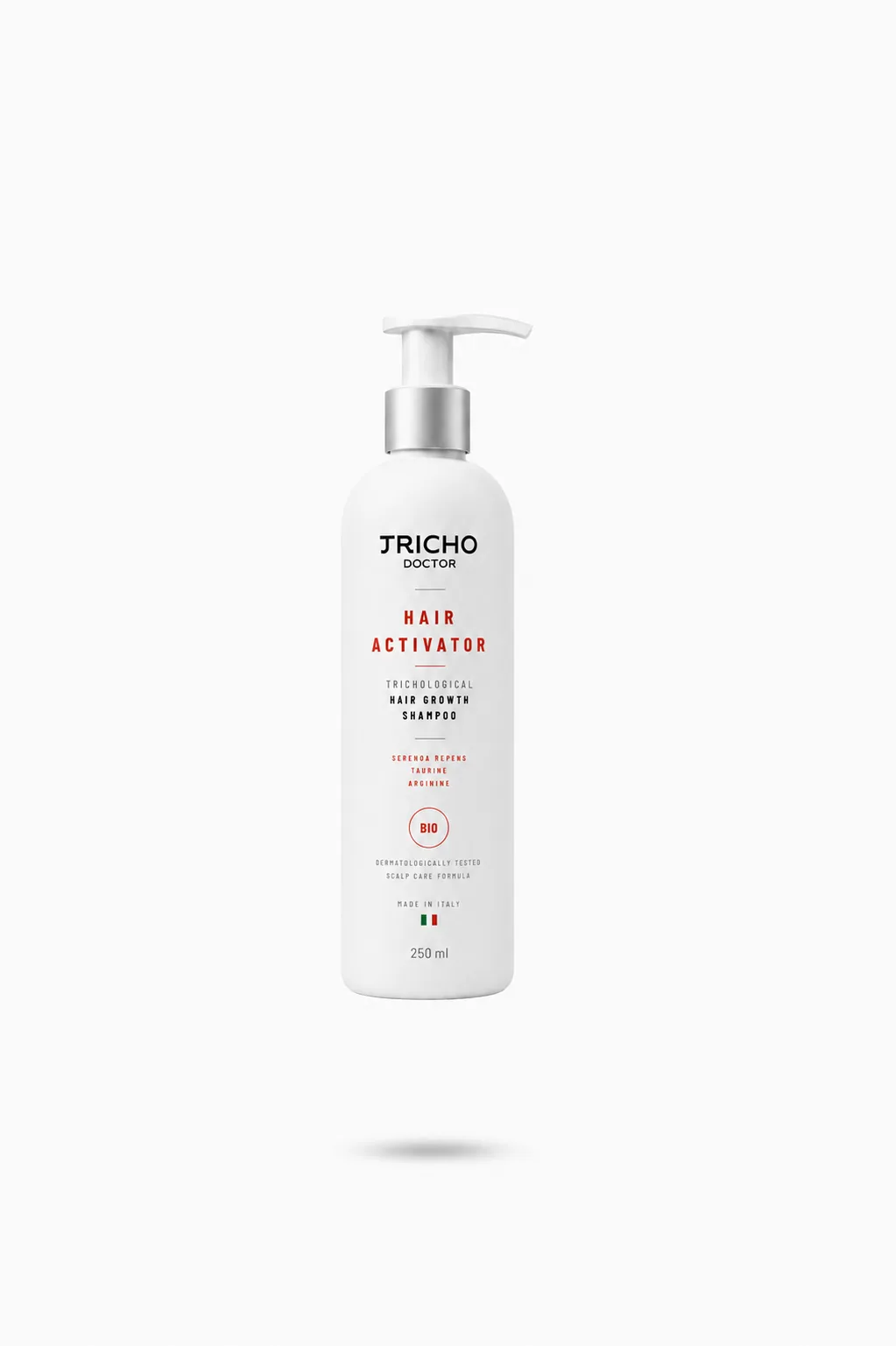
- Hair Activator Shampoo, the cleansing step. This professional shampoo for weakened, fragile hair helps it look fuller. It contains Saw Palmetto Leaf Extract, Taurine, Arginine and Piroctone Olamine.
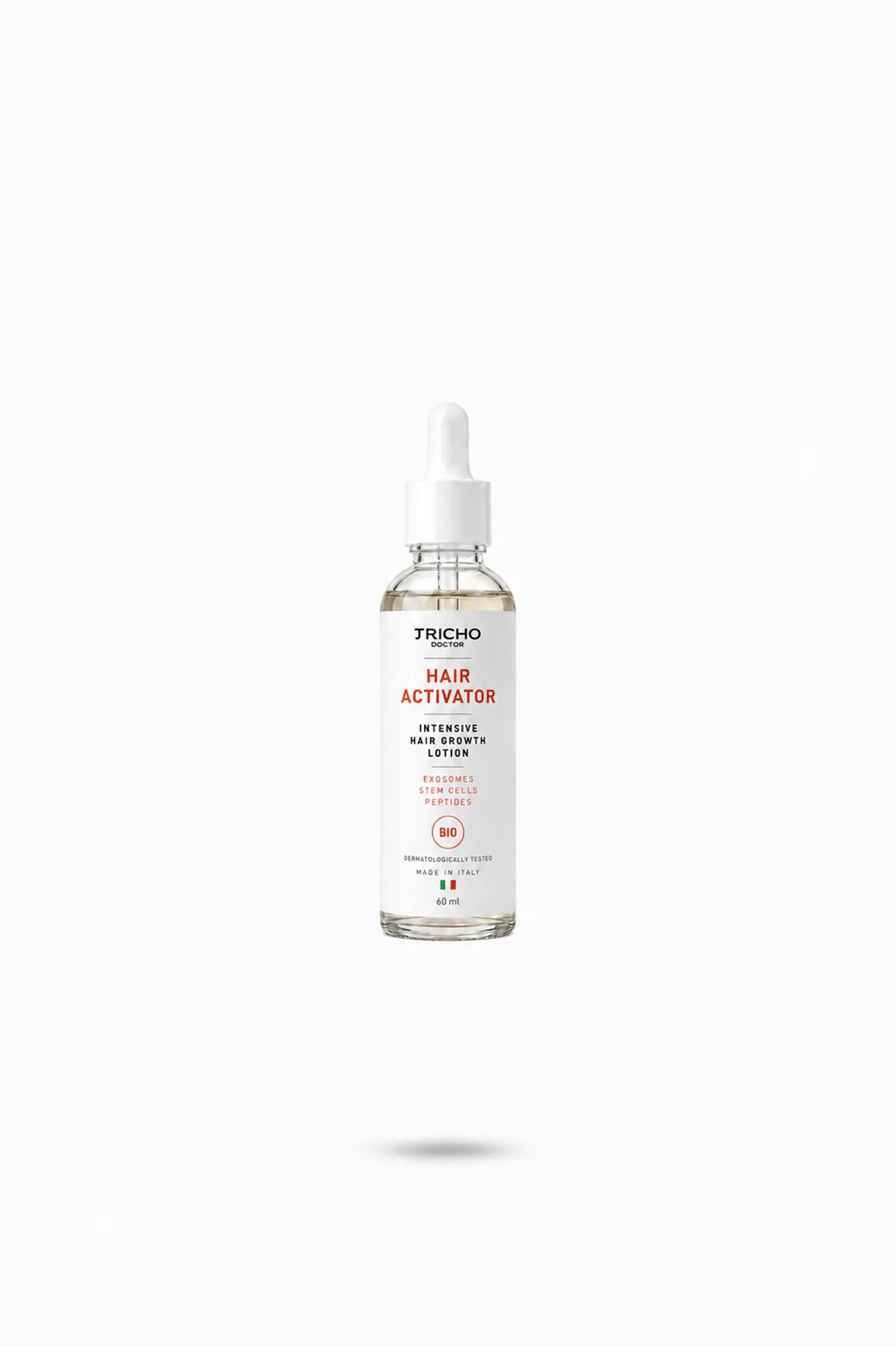
- Hair Activator Lotion, a leave-in step. This intensive scalp lotion for thinning hair contains Capixyl®, Peony-Derived Vesicles and Gardenia Meristem Cell Culture.
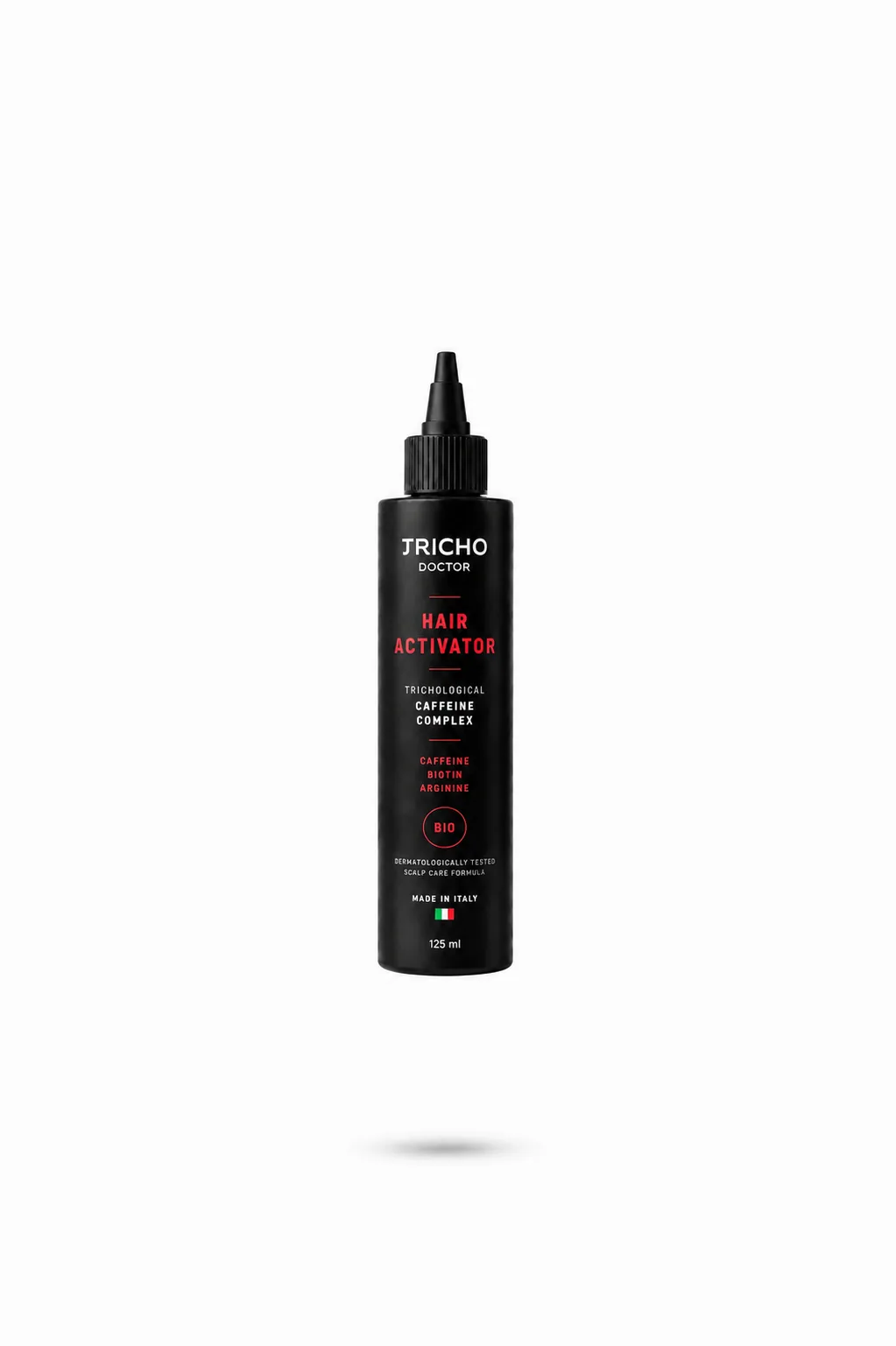
- Caffeine Complex, an energising leave-in complex for weakened and thinning hair. It helps hair look fuller and contains Caffeine, Biotin, Arginine and Niacinamide.
The test decides which products go into your protocol. Follow the directions on each product.
The test selects cosmetic care and does not replace a consultation with a doctor.
Frequently asked questions about thinning hair in women
Can a shampoo stop hair loss?
No. A shampoo cleanses the scalp and cares for the hair. Only a doctor can find the cause of hair loss and prescribe treatment.
Can I combine scalp care with treatment from my doctor?
Yes, but your doctor's advice comes first. If you are having treatment, or you are pregnant or breastfeeding, ask your specialist whether a new product is suitable before you start using it.
How can I tell whether the problem is linked to my scalp?
Look for signs on the scalp itself, such as an oily film, flakes, itching, redness or sensitivity. Only a specialist can say for certain, after an examination, whether these are linked to thinning.
Should I see a dermatologist or a trichologist?
A dermatologist is a good place to start. They will assess your skin and hair and refer you to other specialists if needed. Trichologists also deal with scalp and hair problems. To find cosmetic care that suits your scalp, take the free scalp test.
Sources
- Female pattern hair loss, PubMed (review, primary-care journal), 2018 (accessed November 19, 2026)
- Female pattern hair loss: current treatment concepts, PubMed (review) (accessed November 19, 2026)
- Female pattern hair loss, PubMed (review) (accessed November 19, 2026)
- Female pattern hair loss, PubMed (review), 2013 (accessed November 19, 2026)
- Regulation (EC) No 1223/2009 on cosmetic products, European Parliament and Council (EUR-Lex), 2009 (accessed November 19, 2026)
This article is for information only and does not replace the advice of a doctor or trichologist.