Piroctone olamine vs ketoconazole: anti-dandruff ingredients compared
Piroctone olamine, climbazole, ketoconazole, selenium sulfide, salicylic acid, sulfur: what each anti-dandruff active does, who it suits and how to use it well.
Stand in front of a pharmacy shelf and the anti-dandruff labels soon blur into one: piroctone olamine, climbazole, ketoconazole, selenium sulfide, salicylic acid, sulfur. If you have ever typed "piroctone olamine vs ketoconazole" into a search bar, this guide is for you. Below, the main anti-dandruff ingredients compared side by side: what each one is, what it does on a flaky scalp, who it tends to suit and how to get the most out of it.
Dandruff in brief: yeasts, sebum and flakes
Yeasts of the genus Malassezia live on every scalp and feed on sebum. In people prone to dandruff, the skin reacts to substances released as that sebum is broken down: it renews itself faster than usual and sheds cells in visible clumps.
That is why anti-dandruff ingredients work on one of two fronts, sometimes both:
- The yeasts. Keeping Malassezia activity in check: piroctone olamine, climbazole, ketoconazole, selenium sulfide.
- The flakes. Loosening scales that have already formed so they rinse away: salicylic acid, sulfur.
Sebum itself is managed mainly by the formula as a whole and by how regularly you wash. Most good products combine more than one approach.
Piroctone olamine vs ketoconazole and the other actives
Piroctone olamine
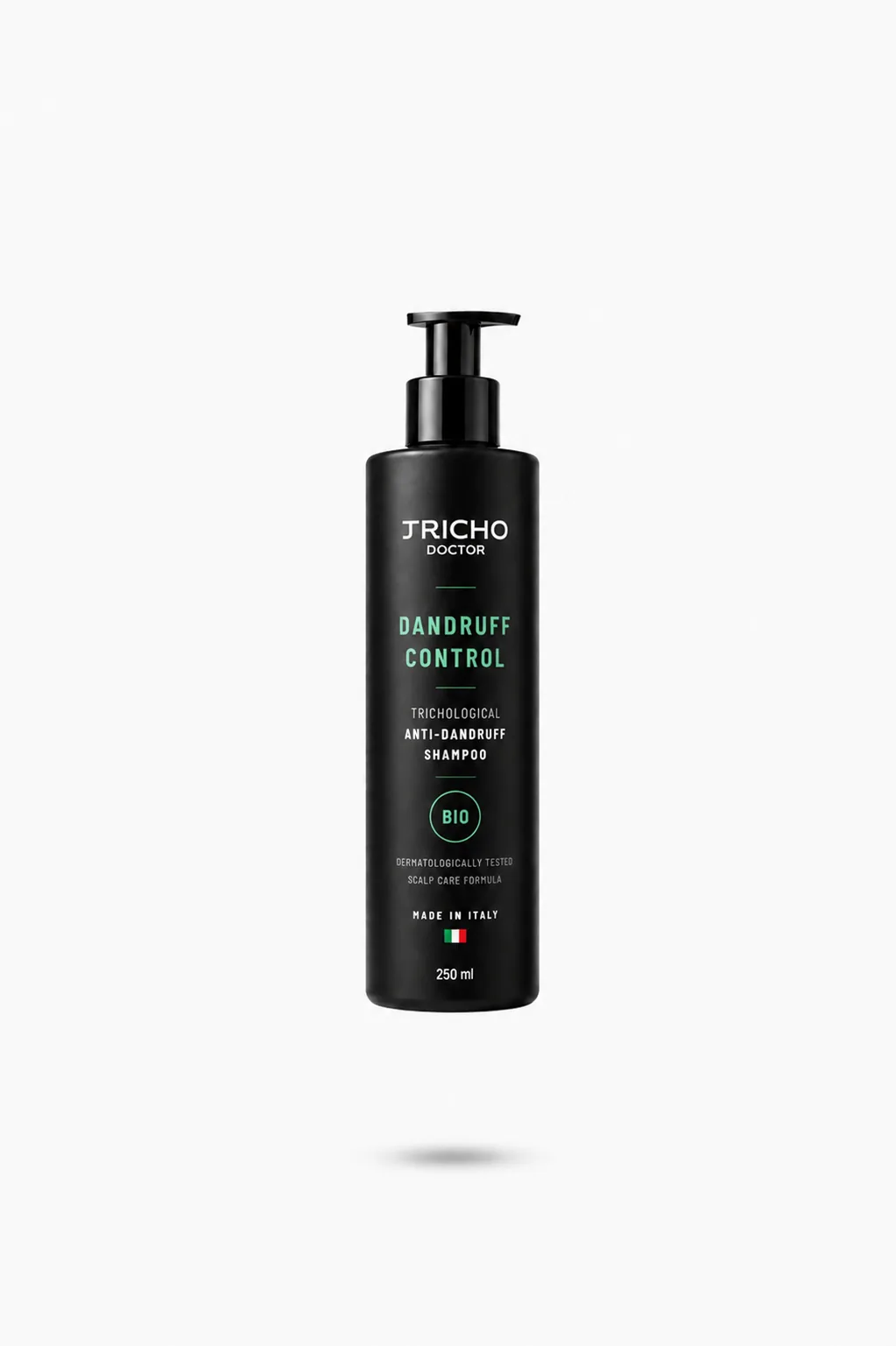
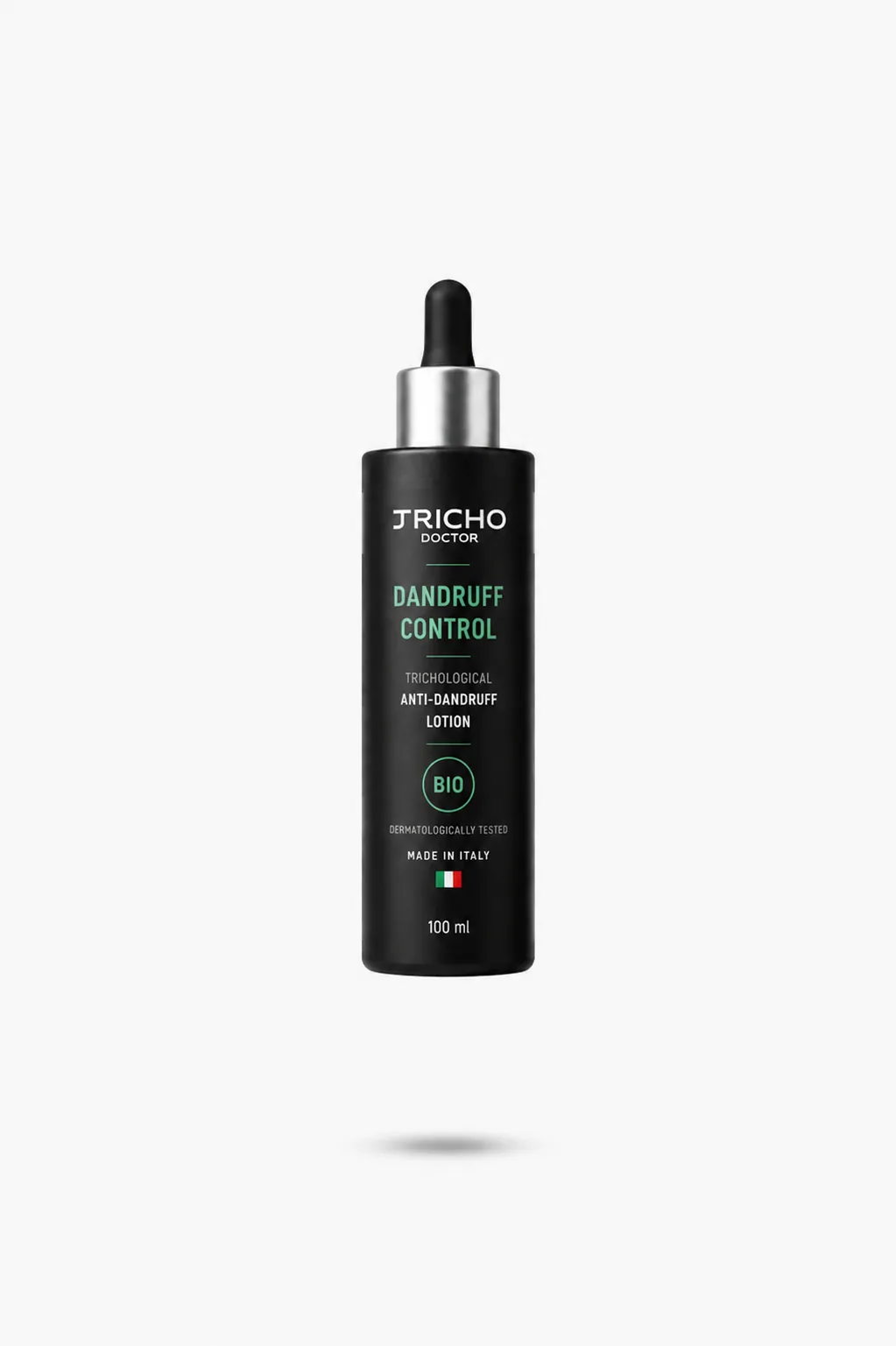
A synthetic cosmetic ingredient, a salt of piroctone and ethanolamine, listed on packs as Piroctone Olamine. Its job is to keep the activity of Malassezia on the scalp surface in check. It is used in rinse-off shampoos as well as leave-in lotions, which makes it easy to build a two-step routine around. It suits most dandruff-prone scalps, from normal to oily, and in a gentle base it also works for more sensitive skin. In the TRICHO DOCTOR range it is the active in Dandruff Control Shampoo, while Dandruff Control Lotion adds salicylic acid.
Zinc pyrithione
For decades one of the best-known anti-dandruff ingredients in the world. It is, however, no longer permitted in cosmetics sold in the EU: since 1 March 2022 it has been on the list of prohibited substances after being classified as a CMR substance. If you spot it on a label, the product was most likely made for a market outside the EU.
Climbazole
A compound from the azole family used in cosmetic shampoos. Like piroctone olamine, it targets Malassezia, and the two are often found in the same formula. You meet it mostly in rinse-off products, so the time the lather stays on the scalp matters. It suits normal to oily scalps with visible flakes.
Ketoconazole
An antifungal substance from the same azole family. In most EU countries ketoconazole shampoos are medicines sold in pharmacies, in some cases only on prescription. Doctors use them, for example, in the treatment of seborrhoeic dermatitis. They are used as a course: how often and for how long is set by the leaflet or by your doctor or pharmacist. It is the option to consider when regular cosmetic care is not enough or when a doctor has made a diagnosis. Ask a pharmacist first if you are pregnant, breastfeeding or buying for a child.
Selenium sulfide
It acts on the yeasts and also slows the rapid turnover of scalp cells. Depending on its strength you find it in pharmacy products or, in smaller amounts, in some shampoos; availability differs from country to country. It has a distinctive smell, it needs thorough rinsing, and it can discolour light, grey or dyed hair. It tends to be chosen for oily scalps with stubborn flakes.
Salicylic acid
A beta-hydroxy acid with a keratolytic effect: it loosens the bonds between dead skin cells, so flakes lift and rinse out more easily. It does nothing to the yeasts, so it is a partner ingredient rather than a stand-alone answer. It helps most with thick, clinging scales. On a dry or sensitive scalp it can tingle or feel drying, so introduce it gradually.
Sulfur
One of the oldest ingredients in scalp care. It loosens scales and has a mild effect on the skin's microbes. It has a characteristic smell and is often paired with salicylic acid. It suits a very oily scalp with greasy, yellowish scales and is less suited to a dry or reactive one. In our range it appears in Sulfur Emulsion, an intensive step for exactly that kind of scalp.
How to use them: contact time, rinsing, alternating
- Give it time. Massage the shampoo into the scalp, not the lengths, and leave the lather on for a few minutes, as the directions say, before rinsing.
- Wash twice if your hair is very oily. The first wash removes sebum; the second gives the active proper contact with the skin.
- Rinse thoroughly. Leftover product can itch, especially with selenium sulfide or sulfur.
- Regularity over intensity. Washing more often than the pack suggests rarely helps and can irritate.
- Alternating. Some people find it useful to alternate two products with different actives, for example one working on the yeasts and one on the flakes. With a medicine, follow the leaflet; between courses, a cosmetic shampoo can carry on the everyday care.
- Conditioner on the lengths only, never on the scalp.
How to choose by scalp type
Oily flakes. Yellowish, greasy scales that stick to the roots, and hair that looks oily within a day. Look for an active that works on the yeasts plus a keratolytic such as salicylic acid or sulfur, and wash regularly.
Dry flakes. Small white flakes that fall onto your shoulders, with a tight-feeling scalp. Sometimes this is simply a dry scalp, not dandruff, and strong keratolytics can make it worse. Choose a gentle anti-yeast active in a mild base and use lukewarm water.
Sensitive scalp. Stinging or redness after washing. Fewer actives, a gentle base, one new product at a time, and no stacking of several keratolytics.
Not sure which description fits you? Take the free scalp test: it asks about your flakes, sebum and sensitivity and suggests a care protocol.
Why a leave-in step helps between washes
A shampoo is in contact with the skin only briefly. Between washes, sebum builds up again and the yeasts carry on. A leave-in lotion stays on the scalp, so the care continues long after the lather has gone. Dandruff Control Lotion combines piroctone olamine with salicylic acid, working on the yeasts and the flakes at once, and it pairs naturally with Dandruff Control Shampoo. Apply it to the scalp parting by parting and do not rinse. It is especially handy if you do not wash your hair every day. If you are using a pharmacy shampoo, ask your pharmacist before adding anything else.
When to see a dermatologist
Cosmetic care has its limits. Book an appointment if you notice:
- marked redness, pain, burning, wounds, or weeping or bleeding patches;
- thick, silvery plaques that spread beyond the hairline or also appear on elbows or knees;
- flaking on the eyebrows, the sides of the nose or behind the ears;
- no improvement after several weeks of regular care;
- sudden or patchy hair loss.
Only a doctor can tell seborrhoeic dermatitis, psoriasis or a fungal infection apart and decide on treatment.
Frequently asked questions
Is piroctone olamine an alternative to ketoconazole?
They belong to different categories. Piroctone olamine is a cosmetic ingredient for regular care of a dandruff-prone scalp; ketoconazole is a medicine used as a course. If a doctor has recommended ketoconazole, follow that advice.
Why are there no zinc pyrithione shampoos in EU shops?
Zinc pyrithione is no longer permitted in cosmetics sold in the EU. Since 1 March 2022 it has been on the list of prohibited substances, so European brands use other actives such as piroctone olamine or climbazole.
Should I alternate anti-dandruff shampoos?
It can help to switch between products with different actives, for example one for the yeasts and one for the flakes. With medicines, always follow the leaflet or your doctor's advice.
Can I use a leave-in lotion together with a medicated shampoo?
Ask your doctor or pharmacist first. While you are on a course of a medicine, it is best not to add new products without advice.
This article is for information only and does not replace the advice of a doctor or trichologist.