Anti-dandruff shampoo not working? Why, and what to change
Your anti-dandruff shampoo helped at first, and now the flakes are back? Often the problem is how it is used, not the bottle. The usual reasons, and a simple plan to get back on track.
You bought a shampoo for dandruff, the first few washes looked promising, and now the flakes are back on your collar. It is a common story, and it rarely means the product has suddenly stopped working or that your scalp has got used to it. When an anti-dandruff shampoo is not working, the cause is usually in how and how often it is used, or in something else in your routine that keeps irritating the scalp. Here are the most frequent reasons, and what to change.
Why your anti-dandruff shampoo is not working
Dandruff is linked to sebum, to the Malassezia yeasts that live on most people’s skin, and to how sensitive your skin is to them. It tends to come back, so a shampoo only helps if it actually reaches the skin, stays there long enough and is used regularly. Most problems come down to one of these points.
- Too little contact time. Lather, rinse, done in thirty seconds? The shampoo barely touches the skin. Massage it into the scalp, leave the lather on for about three to five minutes (or as long as the pack says), then rinse thoroughly.
- You wash the hair, not the scalp. An anti-dandruff shampoo belongs on the skin. Part the hair in a few places and work it in with your fingertips; the lengths get enough as you rinse.
- Washing too rarely. Long gaps let sebum and flakes build up, which gives Malassezia plenty to feed on. A week between washes is often too long for a scalp with dandruff.
- Washing too often, or too hard. The opposite extreme backfires too: repeated aggressive washing, scrubbing with your nails or very hot water can dry and irritate the skin, so it flakes even more.
- The wrong type for your flakes. Small, dry white flakes and a tight-feeling scalp need different care from larger, yellowish, greasy scales that cling to the roots. A product chosen for one may feel too harsh, or not enough, for the other.
- Stopping as soon as it looks better. The flakes disappear, the shampoo goes back on the shelf, and three weeks later it all starts again. Visible improvement is the moment to switch to maintenance, not to stop.
What else keeps the flakes coming back
Sometimes the shampoo is used correctly, but the rest of the routine works against it.
- No step between washes. A shampoo works while you wash. On the days in between, the scalp is left to itself. A leave-in scalp lotion continues the care on those days.
- Hot water. It strips the skin’s protective lipids and adds to itching and tightness. Lukewarm is enough.
- Styling products and heavy conditioners at the roots. Dry shampoo, sprays, waxes and rich conditioners or masks applied to the scalp leave a film that can weigh the skin down and irritate it. Keep conditioner on the lengths and rinse styling products out properly.
- Seasonal change. In winter, dry heated air, hats and hot showers change conditions on the scalp, and many people see flakes return even though nothing else in their routine has changed.
- Stress and too little sleep. Many people notice that dandruff is more visible during demanding weeks. No shampoo can change that, but it helps explain why flakes come and go.
A simple plan: an active phase, then maintenance
Instead of switching products every week, give your scalp a clear plan.
- Active phase. For the first few weeks, use the anti-dandruff shampoo regularly, as directed on the pack, with proper contact time at every wash. Be consistent; skin needs time.
- A leave-in step. If your scalp needs it, apply a leave-in lotion to the scalp between washes, following the pack.
- Maintenance. Once the flakes are under control, do not stop abruptly. Use the anti-dandruff shampoo less often, for example once or twice a week, and a mild shampoo the rest of the time.
- Alternating, if advised. If a pharmacist or doctor has recommended a medicated shampoo (for example one with ketoconazole), follow their schedule for alternating it with your usual care instead of using everything at once.
- A gentle routine. Lukewarm water, fingertips instead of nails, dry roots before you go out, a clean hat, and no oils or heavy products at the roots.
Keep brief notes for a couple of weeks: what you used, how often, and how your scalp looked. It makes it much easier to see what actually helps.
Shampoo and lotion as one protocol
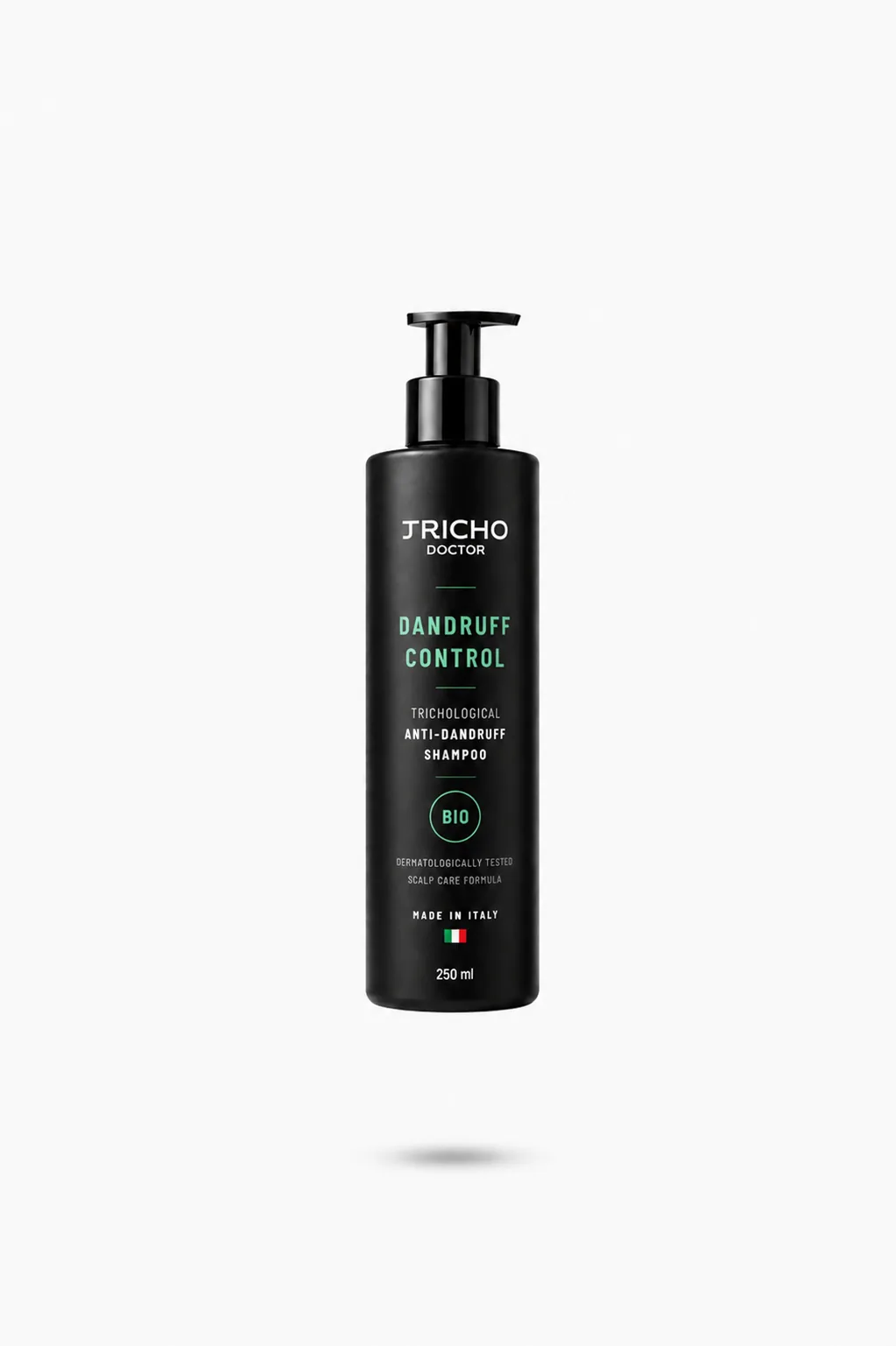
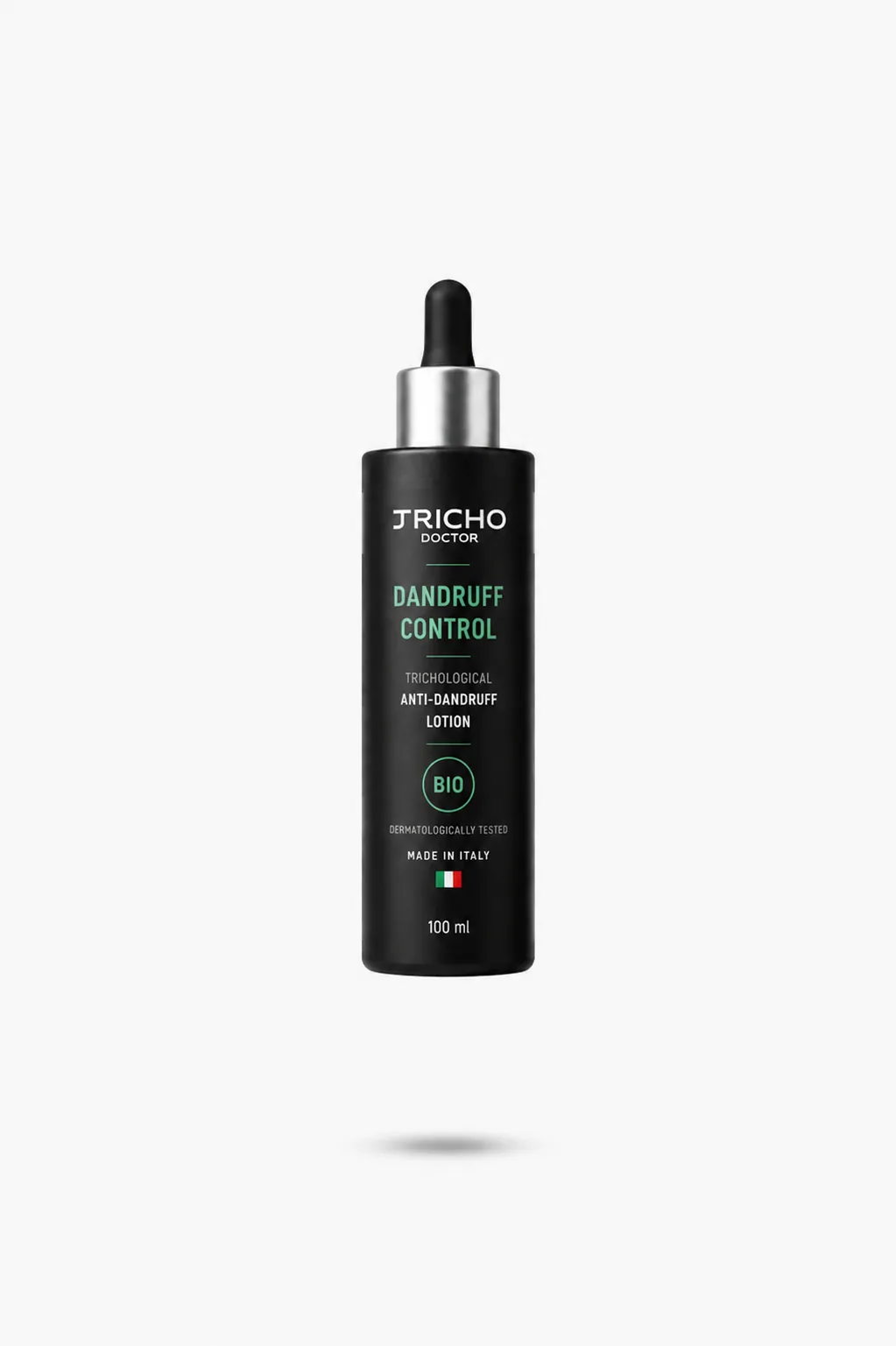
One option is to choose care as a protocol rather than a single bottle. For a dandruff-prone scalp, TRICHO DOCTOR combines two steps.
Dandruff Control Shampoo is the rinse-off cleansing step. Its formula is based on piroctone olamine and helps remove visible flakes at every wash, provided it is given enough time on the scalp.
Dandruff Control Lotion is the leave-in step for the days between washes. It combines piroctone olamine with salicylic acid, which helps loosen scales gently, so the care continues when you do not wash your hair.
Both are cosmetics: they cleanse and care for the scalp and help reduce the look of flaking, but they are not medicines. Whether you need the shampoo alone or both steps depends on your scalp, so start with the free scalp test. It takes a few minutes and suggests a care protocol based on your answers; it is not a diagnosis.
When to see a dermatologist
If a shampoo used correctly still does not help, this may not be ordinary dandruff. See a dermatologist if:
- the scales are thick, yellow and stick firmly to the skin;
- redness spreads beyond the hairline onto the forehead, neck or behind the ears;
- the skin is bleeding, weeping or painful;
- flakes appear on your eyebrows, the sides of your nose or elsewhere on your face;
- there is no improvement after about four to six weeks of correct, regular care;
- hair is falling out in patches, or the changes came on suddenly.
Signs like these may point to seborrhoeic dermatitis, psoriasis or another skin condition. Only a doctor can tell them apart, make a diagnosis and recommend treatment; cosmetic care does not replace it.
Frequently asked questions
Can my scalp get used to an anti-dandruff shampoo?
It is a popular idea, but more often the routine around the shampoo has changed: shorter contact time, longer gaps between washes, a new styling product or the start of winter. Check those first before blaming the product.
How long should I leave anti-dandruff shampoo on?
Usually about three to five minutes after massaging it into the scalp, then rinse thoroughly. Always follow the directions on the pack of your product.
Should I stop using it once the dandruff is gone?
Not abruptly. Switch to a maintenance rhythm, using it less often alongside a mild shampoo. Dandruff tends to return when care stops completely.
Is it worth switching to a different anti-dandruff shampoo?
Sometimes, if the type does not match your flakes. But first make sure you have used the current one properly and regularly for a few weeks. If nothing helps after about four to six weeks, see a dermatologist rather than trying product after product.
This article is for information only and does not replace the advice of a doctor or trichologist.